Wednesday, June 12, 2024

What are the problems with bifocals?

Bifocals have long been a popular solution for correcting vision problems associated with both near and far distances. However, despite their widespread use, they come with a set of challenges that can impact daily life. At Tersigni Vision we understand the importance of clear vision and the frustrations that come with traditional bifocals. In this article, we discuss common issues faced by bifocal users and explore how these types of glasses might not always be the clear-cut solution they seem to be.

7 Most Common Problems With Bifocals

Bifocal glasses can help with different vision needs, like seeing up close and far away, but they’re not perfect. The most common problems with bifocals include:

  1. Adaptation Period: It can take a couple of weeks to get used to bifocal glasses. Initially, wearers may struggle to look through the correct section of the lens for different activities, such as using the lower portion for reading a newspaper and the upper portion for driving.
  2. Bifocal Line Issues: The bifocal line should be at the same level as the bottom eyelid to ensure proper vision for reading or close-up work when glancing down. If the bifocal line is too high, it can result in inadequate distance vision. Adjustments may be needed by an eye doctor to lower the bifocal line or to switch to progressive lenses, which do not have a visible line.
  3. Image Jumping: Wearers might experience “image jumping” or trouble remembering where to look through each lens during the initial adaptation period, affecting their visual perception.
  4. Peripheral Vision: With bifocals, some users become more aware of the frame’s rim in their peripheral vision, which can be distracting until they get used to it. This issue highlights the importance of optics in eyeglass prescription design.
  5. Computer Use: Traditional bifocals are not very user-friendly for prolonged computer work, which can lead to headaches and neck strain. Solutions include using dedicated computer glasses or no-line bifocals and addressing the need for specific corrective lens adjustments for accommodation and refraction.
  6. Reduced Edge-Contrast Sensitivity and Depth Perception: Bifocal glasses can lead to reduced edge-contrast sensitivity and depth perception, increasing the risk of tripping and falling, especially on stairs. This is particularly important for older adults, who are more likely to experience falls due to multifocal glasses. This underscores the complex relationship optometry and ophthalmology face in addressing signs and symptoms of refractive error.
  7. Night Vision Symptoms: Bifocals are presumed to carry higher risks, such as increased night vision symptoms and decreased visual quality, compared to single-vision glasses, a concern for patients with far-sightedness or near-sightedness.

At Tersigni Vision, we know that bifocals might not be the best fit for everyone. That’s why we offer different vision correction options like Custom Lens Replacement, also called Refractive Lens Exchange. This advanced treatment can correct various vision problems, potentially eliminating the need for bifocals, trifocal lenses, or progressive lenses. With treatments customized for each person’s eyes, Tersigni Vision aims to give you clear vision that fits your life better without the downsides of traditional bifocals.

What are the alternatives to bifocal glasses?

Recognizing the need for more permanent and comfortable solutions to presbyopia, Tersigni Vision offers innovative alternatives customized to enhance your vision without the inconveniences of traditional bifocal glasses or contact lenses, such as CLR and RLE.

One of the advanced treatments we provide is Custom Lens Replacement (CLR), also called Refractive Lens Exchange (RLE). This procedure involves replacing the eye’s natural lens with a custom artificial intraocular lens (IOL) designed to correct vision at multiple distances. CLR is a permanent solution that aims to free you from dependency on bifocals or reading glasses.

Another option available at Tersigni Vision is Blended LASIK, a proven technique specifically designed to address presbyopia. This procedure adjusts one eye primarily for distance vision while fine-tuning the other for near to intermediate vision, achieving a balance that allows for clear vision at various distances. This method, often referred to as Monovision LASIK, is carefully customized to match your visual acuity needs and lifestyle, providing a glasses-free solution to presbyopia.

Both Custom Lens Replacement and Blended LASIK are performed by our skilled surgeon, leveraging the latest technology to ensure safety and precision. These procedures not only aim to correct presbyopia but also enhance the overall quality of life by offering an escape from the daily hassles of bifocal glasses.

Choosing the right alternative to bifocals depends on various factors, including your vision needs, lifestyle, and eye health. At Tersigni Vision, we’re committed to guiding you through this decision-making process, providing a comprehensive eye examination and personalized recommendations. By opting for RLE or Blended LASIK, you’re embracing a future with clearer, more dynamic visual perception tailored specifically to your life.

Come see what you’re missing.

More FAQs About The Problems With Bifocals

Why do I experience dizziness with bifocals?

Dizziness is a common issue when adjusting to bifocals due to the different lens powers for near and far vision. If dizziness persists, exploring alternatives like Refractive Lens Exchange or Blended LASIK could provide a more seamless visual transition without the discomfort associated with bifocals.

Can bifocals cause headaches?

Yes, bifocals can cause headaches as your eyes and brain adjust to the new visual zones. This is typically temporary. If headaches continue, it may be worth considering more permanent solutions like Refractive Lens Exchange or Blended LASIK, which can address the need for bifocals and potentially reduce or eliminate these headaches.

Do bifocals worsen presbyopia over time?

No, bifocals do not worsen presbyopia. They are designed to correct vision affected by presbyopia. However, presbyopia progresses naturally with age. At Tersigni Vision, we offer Refractive Lens Exchange and Blended LASIK, providing a more stable long-term solution compared to bifocals.

How long does it take to adjust to bifocals?

Adjustment times vary, but many people adapt to bifocals within a few weeks. If the adjustment period extends beyond a few weeks, alternatives like Refractive Lens Exchange or Blended LASIK at Tersigni Vision may offer a more comfortable visual experience.

Why do I struggle with depth perception when wearing bifocals?

The transition zone in bifocals can alter depth perception as your eyes switch between different lens powers. This can affect activities requiring precise depth judgment. Tersigni Vision’s Blended LASIK or RLE procedures may minimize or eliminate these issues by providing a more uniform field of vision.

Can bifocals affect balance?

Yes, the adjustment to viewing through bifocals can temporarily impact your balance and spatial awareness, especially on stairs or uneven surfaces. Tersigni Vision recommends a cautious approach during the adaptation period. For those who continue to struggle, our Refractive Lens Exchange or Blended LASIK surgeries might offer a more stable solution without the bifocal transition.

Why does text appear blurry in my bifocals?

Blurry text can result from not properly aligning your eyes with the correct part of the bifocal lens. This issue is often resolved with practice and proper fitting. However, if the problem persists, Tersigni Vision can assess your vision needs and discuss whether Refractive Lens Exchange or Blended LASIK would be more effective for you.

Are bifocals supposed to make things look smaller?

Bifocals can slightly alter the size perception of objects, especially when looking through the reading portion of the lens. This effect is due to the lens power needed for near-vision correction. If this becomes bothersome, Tersigni Vision’s advanced vision correction procedures, like Refractive Lens Exchange, can provide a more natural visual experience.

How can I tell if my bifocals are incorrectly fitted?

Incorrectly fitted bifocals can cause discomfort, headaches, or inadequate vision correction. Signs include having to tilt your head unnaturally to see clearly or bifocal lenses that sit too high or low. Schedule a comprehensive eye exam with your eye doctor to ensure your eyewear fits perfectly or to discuss if you’re a candidate for procedures like Refractive Lens Exchange or Blended LASIK for a more permanent fix.

Will switching from bifocals to progressive lenses help?

Progressive lenses offer a gradient of vision correction without visible lines, which some find easier to adapt to than bifocals. However, they also require an adjustment period and may not suit everyone. At Tersigni Vision, we provide personalized consultations to explore alternatives like Refractive Lens Exchange and Blended LASIK to help you find the best solution for your vision needs.


source https://www.tersignivision.com/custom-lens-replacement/what-are-the-problems-with-bifocals/

Monday, June 3, 2024

How do I know if I qualify for LASIK? 9 Things to Know About LASIK Candidacy

Undergoing LASIK surgery is an important decision that can significantly improve your visual perception and quality of life by correcting your vision. To determine if you’re a suitable candidate for LASIK, an advanced form of refractive surgery in ophthalmology, you need to consider several factors, from your eye health to the stability of your visual acuity. At Tersigni Vision, we prioritize a personalized approach, ensuring that each patient receives a thorough assessment and a clear understanding of what to expect from the procedure. If you’re curious about LASIK and wondering if it’s right for you, we invite you to schedule a consultation with our expert team to get all the answers customized specifically for your vision needs. Call Tersigni Vision today to schedule your LASIK consultation.

How do I know if I qualify for LASIK?

1. You’re the right age.

To qualify for LASIK, you need to be at least 18 years old, which is when eyesight has typically stabilized. The effectiveness of LASIK does not diminish significantly with age, allowing many adults, even those in their 40s and beyond, to achieve satisfying results. We take into account your age and eyesight stability, and will offer a tailored procedure to your exact needs.

2. Your eyes are healthy.

To qualify for LASIK, your eyes must be healthy. If you are dealing with conditions such as eye infections, severe dry eyes, or conjunctivitis, you will need to wait until these issues have completely resolved before undergoing the procedure.

At Tersigni Vision will do a full medical eye history with you to ensure your eyes are healthy and ready for LASIK.

3. Your vision prescription is stable.

A stable prescription is crucial for qualifying for LASIK at Tersigni Vision. Candidates should have had a stable prescription for at least a year prior to the surgery. If your prescription is still changing significantly at each annual eye exam, it may be advisable to wait until it stabilizes before considering LASIK. This is critical because the LASIK procedure corrects your vision based on your current prescription, and fluctuations in your vision post-surgery could necessitate further enhancements.

4. Your corneas are thick enough.

Corneal thickness plays a significant role in determining your eligibility for LASIK at Tersigni Vision. The LASIK procedure involves reshaping the cornea to correct vision, but if your cornea is too thin, it might not be possible to achieve the desired results through standard LASIK. Fortunately, advancements in LASIK technology now allow for the treatment of patients with thinner corneas than were previously considered suitable. Typically, the average corneal thickness ranges from 540 to 550 microns, and recent developments in laser technology have expanded the possibilities for patients within this range and slightly below.

5. You don’t have severe dry eye.

If you have dry eye syndrome or a history of dry eyes, recovery from LASIK may present additional challenges, but it doesn’t necessarily disqualify you from undergoing the procedure. As part of the pre-LASIK screening, we thoroughly assess for signs of dry eye. For those prone to this condition, our doctors often recommend treatments to manage and mitigate dry eye symptoms before proceeding with LASIK. Common interventions include the use of artificial tears and nutritional supplements, which can help stabilize your eye health and improve your eligibility for successful LASIK surgery. In addition, there are other modern vision correction procedures that may be more suitable for those with concerns about dry eye.

6. Your eye prescription is within certain limits.

LASIK at Tersigni Vision can correct a wide range of vision problems, but for optimal results, there are limits on how high your corrective lens prescription can be, including those for contact lenses. The excimer lasers we use are FDA-approved to address up to +6.00 diopters of farsightedness, -12 diopters of nearsightedness, and 6.00 diopters of astigmatism. It’s important to note, however, that these parameters might vary based on your specific eye health, the surgical techniques used, and the detailed evaluation conducted by our eye doctors and LASIK specialists. Each patient’s candidacy for LASIK is determined on a case-by-case basis to ensure the safest and most effective outcome. The best news is Tersigni Vision offers multiple LASIK alternatives if you have a high prescription including SMILE and EVO ICL.

7. You’re not pregnant.

If you are pregnant or nursing, it might not be the right time to undergo a LASIK evaluation at Tersigni Vision, due to the hormonal changes that can temporarily alter your vision and prescription. We recommend waiting until after your pregnancy and nursing period have concluded before considering LASIK. Once these stages are over, and depending on the findings from your initial evaluation, our eye doctors or LASIK specialists might suggest allowing a few months for your eyes to stabilize back to their normal condition before proceeding with the surgery. This ensures that the corrections made during the LASIK procedure are accurate and effective.

8.You’re generally healthy.

Qualifying for LASIK at Tersigni Vision requires not only healthy eyes but also overall good health. If you have any medical conditions that might hinder your body’s ability to heal, it’s crucial to discuss these with your doctor and inform your LASIK surgeon. Conditions such as autoimmune diseases like HIV/AIDS or lupus, diabetes, rheumatoid arthritis, depression, and chronic pain conditions including irritable bowel syndrome, fibromyalgia, or migraines may impact your suitability for LASIK. These conditions can affect how well you recover from surgery and could make LASIK less effective or advisable. It’s important to evaluate these health aspects thoroughly during your consultation to ensure the best possible outcomes.

9. You’ve done your research and are ready.

The final step in determining if you are a good candidate for LASIK eye surgery at Tersigni Vision involves doing thorough research and preparing yourself. It’s essential to educate yourself about LASIK, consult with your eye doctor, and visit a LASIK surgeon equipped with a list of questions you’d like answered. Being well-informed and proactive about understanding the procedure, its benefits, and potential risks will help you make an informed decision about whether LASIK is suitable for you. This educational component is a core belief at Tersigni Vision. If you’re ready to explore your options further and assess your candidacy for LASIK, we encourage you to schedule a consultation with Tersigni Vision. We’ll answer all your questions to help you feel confident about your procedure choice.

What do I do if I think I am a good candidate for LASIK surgery?

That’s great! If you are considering LASIK surgery and live near Portland, Oregon, Dr. Tersigni is here to guide you through every step of the process. Our comprehensive Advanced Ocular Analysis is the leading standard in assessing your LASIK readiness due to its breadth and depth. Dr. Tersigni will review your results with you and see if you are candidate for LASIK or a LASIK alternative procedure. Because we offer the broadest selection of procedures in Portland, you have the best opportunity to have the exact procedure you need. Your vision health is our priority, and we’re dedicated to providing you with all the information you need to make a well-informed decision. Take the first step towards clearer vision by reaching out to us for a comprehensive consultation. Our expert team is ready to assess your suitability for LASIK and answer any questions you may have. Contact Tersigni Vision today to schedule your appointment and explore how LASIK can enhance your quality of life.

Come see what you’re missing.

What if I am not a good candidate for LASIK? There are alternatives!

Many people have been told they aren’t a good candidate for LASIK and give up hope on vision correction procedures. There is good news. There are many modern LASIK alternatives like SMILE, PRK, EVO ICL, Refractive Lens Exchange/Custom Lens Replacements and other state of the art treatments that can be utilized when LASIK cannot. Many vision correction practices, who only offer LASIK, will tell you that you aren’t a candidate and send you on your merry way. It’s because LASIK is their only option. Don’t give up. There are many vision correction options at Tersigni Vision that can work safely and effectively. Tersigni Vision offers the fullest spectrum of laser vision correction procedures anywhere in Portland. Come get your Advanced Ocular Analysis and a consultation with Dr. Tersigni. He will educate you on the best alternative procedure options for you, even if someone told you aren’t a LASIK candidate.

FAQ’s About How Do I Know If I Qualify For LASIK

What eye conditions disqualify you from LASIK?

Certain eye conditions can disqualify you from undergoing LASIK, a procedure approved by the Food and Drug Administration (FDA). These include severe signs and symptoms of dry eye syndrome, keratoconus, cataracts, glaucoma with high eye pressure, and any retinal diseases. At Tersigni Vision, a thorough examination by our surgeon will determine if any of these conditions affect your suitability for LASIK and if another procedure may be more appropriate.

Does having astigmatism exclude me from LASIK surgery?

Not at all. LASIK, a type of refractive surgery, can effectively correct astigmatism, a common refractive error, alongside other issues corrected by eyeglass prescriptions. Tersigni Vision utilizes advanced laser technology tailored to correct the unique imperfections of your eye, including astigmatism.

Can I get LASIK if I have very high myopia?

High myopia does present challenges, but LASIK might still be an option depending on the thickness of your cornea and the degree of myopia measured in dioptres. At Tersigni Vision, we assess such cases individually to ensure the safest and most effective outcomes.

Is there a minimum age requirement for LASIK?

Yes, generally patients must be at least 18 years old to undergo LASIK because the vision must be stable.

Can previous eye surgeries affect my eligibility for LASIK?

Previous eye surgeries, including photorefractive keratectomy, can affect your LASIK eligibility, particularly if they have altered the shape or tissue health of your cornea. Tersigni Vision will conduct a detailed assessment of your eye history to determine if LASIK is advisable.

How does pregnancy affect LASIK eligibility?

Pregnancy and nursing can cause temporary vision changes due to hormonal fluctuations. Tersigni Vision advises waiting several months after nursing has concluded to ensure your vision has stabilized before considering LASIK.

What is the upper age limit for LASIK surgery?

There is no upper age limit for LASIK, but older patients often have other eye conditions that might need to be addressed first. Tersigni Vision evaluates these patients on a case-by-case basis to ensure optimal outcomes.

Can LASIK correct presbyopia (aging eyes)?

LASIK cannot correct presbyopia directly, but procedures like monovision LASIK, where one eye is corrected for distance and the other for near vision, might be an option. Tersigni Vision offers consultations to discuss alternatives suitable for aging eyes.

What if my vision hasn’t been stable for a year?

Stability in your glasses prescription for at least a year is crucial for a successful LASIK outcome. Tersigni Vision recommends waiting until your prescription stabilizes to proceed with LASIK for the best long-term results. If you have any questions regarding this, don’t hesitate to call us and ask.

Are there lifestyle considerations that might affect my LASIK eligibility?

Yes, lifestyle factors such as engaging in contact sports or having a job that puts you at risk for facial injuries might affect your suitability for LASIK. Tersigni Vision evaluates these factors during your consultation to ensure that LASIK is a practical option for you. There are many procedures Dr. Tersigni can choose from to best meet your lifestyle.


source https://www.tersignivision.com/lasik/how-do-i-know-if-i-qualify-for-lasik-9-things-to-know-about-lasik-candidacy/

Monday, May 20, 2024

Eye Makeup After LASIK

Undergoing LASIK surgery at Tersigni Vision is a transformative experience, offering you the clarity of vision you’ve longed for. However, post-surgery care is crucial, especially when it comes to eye makeup. After your LASIK surgery at Tersigni Vision, you won’t need glasses for clear visual perception; however, it’s important to understand the right time and techniques to safely reintroduce cosmetics to prevent any complications. To find out if you are a candidate for LASIK and learn more about wearing eye makeup after LASIK, schedule your consultation with Tersigni Vision today. Our team is here to answer your questions and guide you through every step of your LASIK journey.

When can you wear eye makeup after LASIK?

You should wait at least one week after your LASIK surgery before wearing eye makeup like mascara, eye liner, or eyeshadow. Leading up to the surgery, it’s crucial to avoid makeup for at least 24 hours to ensure a clean and safe procedure. Post-LASIK, you should avoid using eye makeup for about a week to facilitate optimal healing and prevent any potential complications. It’s important to let any crusting around the eye area heal completely and to apply makeup gently to avoid pressure on the eyes. After this period, while you can start wearing makeup again, it’s advisable to use products that are less likely to irritate your eyes. When you start wearing makeup again after LASIK, be particularly cautious about applying any products on the waterline, as this sensitive area is more prone to irritation. Always monitor for any signs of discomfort or changes in vision, and consult with your doctor if any issues arise. While the general guideline is to wait a week before wearing eye makeup, the exact timing can depend on individual healing progress and the advice of Dr. Tersigni, your LASIK surgeon.

What kind of makeup can you wear after LASIK?

After LASIK surgery, you can wear makeup that is not applied on or near the eyes like foundation, concealer, blush, and contour as early as the day following your procedure, provided they are applied carefully and kept away from the eye area. When applying lotion to your face after LASIK, be sure to avoid the eye area to prevent any interference with the healing process. The sensitive nature of your eyes post-surgery means that it’s crucial to avoid any makeup close to them during the initial healing period. Specifically, it is recommended to wait about 7 days before applying eye makeup such as mascara, eyeliner, or eyeshadow to allow your eyes to heal adequately. While makeup like foundation, concealer, and lipstick can be worn, it’s important to ensure that these products do not come into contact with your eyes to minimize the risk of irritation and allow a smooth recovery process.

How do you remove eye makeup after LASIK?

To remove eye makeup after LASIK surgery, it is important to be very gentle and take your time to avoid irritation and potential complications during the healing process. Using a soft, downward motion instead of rubbing side to side can help minimize pressure on the eyes and reduce the risk of damaging the surgical area. It’s recommended to choose eye makeup products that are easy to remove to prevent the need for excessive rubbing or harsh cleaners. It’s important to avoid using aggressive force or harsh makeup removers and soaps, as these can irritate the sensitive eye area in the critical weeks following your surgery. Taking extra care during makeup removal is a small but significant step in ensuring a smooth recovery after your LASIK procedure at Tersigni Vision.

Why does the surgeon tell you not to wear makeup after LASIK?

Surgeons advise against wearing makeup after LASIK surgery to prevent infection and ensure proper healing of the eyes. The LASIK procedure uses a precise laser to correct vision, so post-operative care, including makeup application, must be approached with caution to protect your eyes. In the initial week post-surgery, the risk of introducing bacteria to the eyes is particularly high, and makeup, along with its applicators, can be a breeding ground for these harmful microorganisms. Even with meticulous application, the chance of accidentally contaminating the eye area and hindering the healing process is significant. Your cornea will have just been reshaped during LASIK, and it requires an uncontaminated environment to heal optimally. Post-operative care primarily involves using prescribed anti-bacterial drops, and introducing makeup into the routine too soon can compromise the sterile conditions needed for recovery. Research indicates that opened makeup products often harbor bacteria, which also poses an infection risk to the healing eyes. Therefore, abstaining from eye makeup immediately after LASIK is crucial for successful healing and avoiding setbacks in your recovery journey. Following LASIK at Tersigni Vision, you’ll experience the joy of clear vision without the need for glasses or contact lenses, but remember to be mindful of how you reintroduce makeup.

Come see what you’re missing.

More FAQ’s About Eye Makeup After LASIK

Can I use eyelash extensions after LASIK?

After LASIK, it’s advisable to wait until your doctor at Tersigni Vision gives the go-ahead before using eyelash extensions or false eyelashes, typically around 4 to 6 weeks post-surgery. This waiting period ensures your eyes heal properly and reduces the risk of complications.

Is it safe to use eye primer after LASIK?

At Tersigni Vision, we recommend waiting at least a week before using eye primer post-LASIK to avoid any potential irritation. Your surgeon will provide personalized advice based on your healing progress.

Can I use waterproof makeup after LASIK?

Waterproof makeup should be avoided immediately after LASIK, as it requires more vigorous removal which can irritate the eyes. Tersigni Vision suggests waiting until your follow-up appointment to confirm it’s safe to use such products.

How soon after LASIK can I wear kohl or pencil eyeliner?

Tersigni Vision advises waiting at least one week after LASIK before using kohl or pencil eyeliner to prevent any particles from entering and irritating the eye, allowing ample time for healing.

Is it okay to use makeup remover wipes after LASIK?

While gentle makeup remover wipes can be used after LASIK, Tersigni Vision recommends being extremely cautious and gentle, particularly around the eye area, to avoid any unnecessary pressure or irritation.

When can I start using eyeshadow after LASIK?

Tersigni Vision typically advises patients to wait at least a week before applying eye shadow post-LASIK to ensure the eyes have adequately healed and to minimize the risk of irritation.

Can I use setting spray on my face after LASIK?

Using setting spray after LASIK eye surgery is generally safe, provided you keep your eyes closed and avoid direct contact with the eye area. Tersigni Vision suggests waiting a few days post-surgery before using such products.

Are there specific brands of makeup recommended after LASIK?

Tersigni Vision recommends using hypoallergenic and non-irritating makeup brands post-LASIK. It’s best to choose products that are fragrance-free and designed for sensitive skin to minimize the risk of irritation.

Can wearing makeup affect my LASIK results?

While wearing makeup after the recommended waiting period should not affect your LASIK results, Tersigni Vision advises against applying makeup too soon after surgery to prevent any potential complications that could impact healing. Improving your visual perception with LASIK at Tersigni Vision is an exciting journey, and understanding how to care for your eyes, including makeup usage, is an important part of the process.

How to clean makeup brushes and sponges to prevent infection after LASIK?

Tersigni Vision emphasizes the importance of thoroughly cleaning makeup tools before use post-LASIK. Brushes and sponges should be washed with gentle soap and water, then dried completely to remove bacteria and prevent infection.


source https://www.tersignivision.com/lasik/eye-makeup-after-lasik/

Friday, May 17, 2024

Does LASIK require anesthesia?

At Tersigni Vision, we frequently answer many questions about LASIK surgery, particularly regarding the use of anesthesia. This article will discuss whether anesthesia is necessary for LASIK and what patients can expect during the procedure. Our goal is to provide vital information to our patients to ensure their comfort and confidence in their decision to undergo LASIK surgery at Tersigni Vision. To learn more about LASIK and how you can achieve a life free from glasses or contact lenses, schedule a consultation with Tersigni Vision today and take the first step towards a clear vision.

Does LASIK require anesthesia?

Yes, LASIK requires anesthesia, but it is local anesthesia via numbing eyedrops rather than general anesthesia, meaning it does not put patients to sleep. During LASIK surgery, local anesthesia is administered through numbing eye drops to ensure that patients experience no pain during the procedure. Occasionally, a mild oral sedative may also be provided to help patients relax while staying awake. This approach is essential as it allows patients to be alert and capable of following the surgeon’s instructions, which is vital for the success of the surgery. Unlike more invasive operations, LASIK does not require general anesthesia, which induces unconsciousness and carries more significant risks. General anesthesia is unnecessary for LASIK, as the surgery is quick and involves minimal discomfort.

While the idea of being asleep during the LASIK procedure might seem appealing to some, patient cooperation and the ability to follow visual cues during the procedure are crucial for LASIK. During LASIK surgery at Tersigni Vision, a laser is used to precisely reshape the cornea, improving the eye’s ability to focus light and enhancing visual clarity. During the LASIK process at Tersigni Vision, patients are required to focus on a light for approximately one minute while the laser is applied. Maintaining a steady gaze on this light is imperative to achieve the most precise results, underscoring the importance of being conscious and responsive during the procedure.

Are Injections or Needles Used To Numb the Eye During LASIK Laser Eye Surgery?

No, injections or needles are not used to numb the eye during LASIK laser eye surgery at Tersigni Vision. The LASIK procedure exclusively utilizes topical anesthetic eye drops to achieve numbness in the eye. These drops ensure that patients remain awake and comfortable throughout the surgery, effectively eliminating any pain associated with the LASIK process. This method is preferred for its simplicity and effectiveness in providing a pain-free experience for patients undergoing the procedure.

Clear Vision with Confidence at Tersigni Vision

At Tersigni Vision, we are committed to ensuring that every patient has a comfortable and informed experience with LASIK surgery. If you’re considering LASIK and have concerns about the procedure, let us put your mind at ease. Contact Tersigni Vision today to schedule a consultation. Our experts are here to guide you through every step, ensuring clarity not just in your vision, but in every aspect of your LASIK experience. Take the next step towards clear vision with Tersigni Vision, where your vision is our focus.

Come see what you’re missing.

MORE FAQ’s About Does LASIK Require Anesthesia

If I am awake during LASIK will I feel anything?

Our patients experience minimal sensation during the procedure, typically no more than a slight pressure on the eye, if anything. At Tersigni Vision, we understand concerns about being awake during LASIK and the fear of feeling discomfort but can assure you that you will not feel any pain.

How long does the numbing effect last during LASIK?

At Tersigni Vision, the numbing effect from the anesthetic drops used during LASIK typically lasts throughout the procedure, ensuring patient comfort from start to finish, usually around 30 minutes.

What if I blink or move during LASIK surgery?

Tersigni Vision utilizes advanced LASIK technology with eye-tracking capabilities to compensate for any involuntary movements, ensuring the laser remains precisely focused during the procedure. A small device called a speculum, or eyelid holder, is used during LASIK surgery to gently keep the eyelids open and prevent any involuntary blinking, ensuring a smooth and uninterrupted procedure.

Are there alternatives to eye drops for numbing during LASIK?

While topical anesthetic drops are standard for numbing in LASIK, Tersigni Vision ensures that each patient’s comfort and medical needs are met, discussing alternatives if necessary.

What happens if the anesthesia wears off during LASIK?

The likelihood of anesthesia wearing off during LASIK is extremely low; however, Tersigni Vision is prepared to administer additional numbing drops if needed to maintain patient comfort.

Can LASIK be performed under general anesthesia?

LASIK at Tersigni Vision is not performed under general anesthesia due to its risks and unnecessary nature for this minimally invasive procedure, ensuring safety and quick recovery. An oral sedative medication can be given to help patients relax if necessary. Being conscious during LASIK allows Dr. Tersigni to monitor the patient’s visual perception in real-time, ensuring optimal alignment and accuracy of the laser treatment on the cornea.

Is the LASIK procedure painful without general anesthesia?

No, the LASIK procedure at Tersigni Vision is not painful, as the numbing drops effectively prevent discomfort, allowing the surgery to be performed quickly and painlessly.


source https://www.tersignivision.com/lasik/does-lasik-require-anesthesia/

Monday, March 11, 2024

What if I’m not a candidate for LASIK? Can You Still Help

At Tersigni Vision, we understand the importance of clear vision and its role in enhancing your everyday life. While LASIK (laser-assisted in situ keratomileusis) has transformed the lives of many, it’s not a one-size-fits-all solution. If you’ve been told you’re not a candidate for LASIK, don’t lose hope. Our team is dedicated to exploring alternative treatments that can address your unique visual perception needs and help you achieve the clarity you deserve.

What if I’m not a candidate for LASIK? Can You Still Help

For individuals with thin corneas, irregularly shaped corneas, corneal scarring, high prescriptions, or other unique eye conditions, LASIK might not be the best option. However, Dr. Tersigni and our team offer the widest variety of effective LASIK alternatives in Portland. Because of this full spectrum of LASIK alternatives, we can cater to the widest range of refractive errors and specific eye health concerns. Discovering that you’re not a candidate for LASIK surgery can be disheartening, but at Tersigni Vision, it’s far from the end of the road in your journey towards clearer vision.

One such alternative is Photorefractive Keratectomy (PRK), a type of refractive surgery that, much like LASIK, uses a laser to reshape the cornea but differs in its approach by removing the front epithelial tissue layer. This procedure is just as effective in correcting refractive errors, including near-sightedness, far-sightedness, and astigmatism. PRK might involve a slightly longer recovery period than LASIK, with a temporary bandage contact lens applied to protect the cornea as it heals. However, the end result is comparable to LASIK.

For those with high degrees of refractive errors that corneal-based surgeries cannot correct, thin or irregular corneas, or those struggle with severe dry eye, Phakic Intraocular Lenses (IOLs) offer a promising solution. This procedure involves the surgical implantation of a lens inside the eye, either in front of or behind the iris, without removing the natural lens. This method preserves the eye’s pre-existing ability to focus while correcting vision.

Another innovative procedure is Refractive Lens Exchange (RLE), also called Custom Lens Replacement (CLR), where the eye’s natural lens is replaced with an artificial one. Similar to cataract surgery, RLE can significantly improve vision for individuals with severe hyperopia or those for whom LASIK is not recommended, and also is a solution that can restore reading vision in those that have become dependent on reading glasses. RLE offers patients more choices for correcting their vision including multifocal or accommodative IOLs that enable focus at various distances.

At Tersigni Vision, we’re committed to finding the right solution for your vision needs. If LASIK isn’t suitable for you, rest assured that Dr. Tersigni has a range of alternatives to explore. We encourage you to reach out for a consultation, where a thorough eye exam will reveal the best procedure for your unique situation. Your journey to clearer vision is just a call away.

Who is not a candidate for LASIK?

Some of the key considerations for LASIK candidacy include the necessity for good overall eye health without diseases or infections, stable vision without prescription changes for at least a year, sufficient corneal thickness for the procedure, and the absence of autoimmune diseases that could impede healing. At Tersigni Vision, Dr. Tersigni and his team carefully assess your eye health, vision stability with a comprehensive evaluation, and consider your overall well-being to ensure LASIK is the best option for you.

There are specific circumstances where LASIK may not be the right choice at the current time. For instance, individuals under 18 are not candidates for LASIK as vision can significantly change during adolescent years. Also those pregnant or nursing should not undergo LASIK due to potential hormone-induced vision changes. These factors do not make an individual permanently disqualified from LASIK; they may need to just postpone consideration of LASIK.

Prescription medication that interferes with healing, fluctuating vision prescriptions, and certain health conditions like autoimmune diseases or diabetes also play a critical role in determining LASIK candidacy. Additionally, dry eye syndrome can significantly impact both the procedure’s success and post-operative recovery, necessitating prior treatment to address the dry eye condition.

Beyond these medical and physical considerations, expectations play a crucial role. LASIK offers remarkable improvements in vision, but it’s vital to maintain realistic expectations about the outcomes, acknowledging that perfection is unattainable and that some may still require glasses for certain activities post-surgery.

For those who find LASIK isn’t an option due to these considerations, Tersigni Vision offers alternative procedures such as PRK, EVO ICL, Refractive Lens Exchange, and SMILE eye surgery. Each of these alternatives caters to different vision correction needs and personal circumstances, ensuring that a path to clearer vision is still within reach. Dr. Tersigni’s commitment to personalized care means that during your consultation, all aspects of your eye health and vision goals are considered to select the most appropriate treatment plan for you.

Beyond LASIK: Discover Your Path to Clear Vision with Tersigni Vision’s Comprehensive Solutions

Come see what you’re missing.

What if I’m not a candidate for LASIK? Can You Still Help?

The journey to perfect vision is as unique as you are. At Tersigni Vision, we pride ourselves on offering a broader spectrum of laser vision correction procedures than any other practice in Portland. Dr. Tersigni’s expertise and our commitment to personalized care ensure that every patient finds a path to clearer vision, tailored specifically to their needs. Whether it’s PRK, EVO ICL, Refractive Lens Exchange, or SMILE surgery, we’re equipped to guide you through your options and find the best solution for your vision. Don’t let the question of candidacy deter you from exploring the possibilities. Reach out to Tersigni Vision today to schedule your consultation, and embark on a journey towards achieving the clear vision you deserve with the most comprehensive options available in Portland.

More FAQ’s About What if I’m not a Candidate for LASIK

Why might I not be a candidate for LASIK?

At Tersigni Vision, several factors can determine LASIK candidacy, including insufficient corneal thickness, unstable vision prescription, existing eye conditions like keratoconus, active eye infections, or systemic health issues such as autoimmune diseases. Each of these factors can impact the safety and effectiveness of the LASIK procedure.

What are the alternatives if I’m not eligible for LASIK?

If LASIK laser eye surgery isn’t suitable for you, Tersigni Vision offers alternatives like PRK, EVO ICL, Refractive Lens Exchange or Custom Lens Replacement, and SMILE eye surgeries. These options cater to a wide range of vision correction needs, ensuring that there’s a path to improved vision tailored to your specific circumstances.

Can having thin corneas disqualify me from LASIK?

Yes, having thin corneas can disqualify you from LASIK at Tersigni Vision because the procedure requires reshaping the cornea with a laser, which necessitates a certain corneal thickness to be safe and effective. Alternative treatments are available for those with thin corneas.

Is age a factor in LASIK candidacy?

Indeed, age is a factor in determining LASIK candidacy. At Tersigni Vision, patients must be at least 18 years old with a stable vision prescription for at least one year. However, there’s no upper age limit for LASIK; candidacy is more about eye health and prescription stability.

Can I have LASIK if I have dry eye syndrome?

Dry eye syndrome can affect LASIK candidacy. At Tersigni Vision, your refractive surgeon, Dr. Tersigni, evaluates your dry eye condition to determine if it can be effectively managed or treated before undergoing LASIK. In some cases, treating dry eye may allow for LASIK, or alternative procedures may be recommended.

How does pregnancy affect LASIK candidacy?

Pregnancy and nursing can lead to temporary vision changes, making it inadvisable to undergo LASIK during these times. Tersigni Vision recommends waiting until your prescription has stabilized for at least a few months post-nursing before considering LASIK.

Can LASIK correct all types of vision problems?

LASIK at Tersigni Vision is highly effective for correcting myopia (nearsightedness), hyperopia (farsightedness), and astigmatism. However, its suitability depends on individual factors like corneal thickness and eye health. For conditions outside LASIK’s corrective range, alternatives are offered.

What medical conditions could make me ineligible for LASIK?

Systemic health conditions, especially autoimmune diseases or conditions like uncontrolled diabetes, can impact LASIK candidacy at Tersigni Vision due to potential healing complications. A comprehensive health assessment helps determine the safest vision correction option for you.

If I’ve had previous eye surgeries, can I still get LASIK?

Previous eye surgeries do not automatically disqualify you from LASIK at Tersigni Vision. However, factors like the type of surgery, healing outcomes, and current eye health will be carefully evaluated to ensure LASIK is a viable and safe option.

How stable does my vision need to be for LASIK?

Stable vision, typically with no significant prescription changes for at least a year, is required for LASIK candidacy at Tersigni Vision. This stability indicates that your eyes are unlikely to undergo significant natural changes soon after the procedure, ensuring lasting results.


source https://www.tersignivision.com/lasik/what-if-im-not-a-candidate-for-lasik-can-you-still-help/

Thursday, March 7, 2024

LASIK and Claustrophobia: How to Overcome It

When considering a life-changing LASIK procedure, patients have many questions. We are here to answer each question and make sure you are confident in your decision to have LASIK. One question you might wonder about is how you can overcome claustrophobia during LASIK. This article will answer that question as well as other questions related to claustrophobia and LASIK. As a refractive LASIK surgeon in the Portland area, Dr. Tersigni’s calming demeanor and years of experience in vision correction surgery help alleviate patient’s fears. Contact our office now for additional information and to book an appointment to determine whether you are a good candidate for LASIK. You’ll enjoy meeting our team and Dr. Tersigni. We want you to be able to say goodbye to contact lenses and glasses once and for all.

For individuals who struggle with claustrophobia, it’s understandable to have concerns about undergoing LASIK.

Does LASIK trigger claustrophobia for those who struggle with it?

LASIK might pose challenges for some who struggle with claustrophobia; however, it’s important to note that our team is highly experienced in managing such concerns.

During LASIK surgery, moments that could potentially trigger claustrophobia include the use of an eye fixation device and the sensation of being in a confined space. However, at Tersigni Vision, we take extensive measures to ensure patient comfort and ease anxiety. Our approach includes thorough pre-procedure discussions to familiarize patients with what to expect, the use of calming techniques, and, if necessary, mild sedatives to help relax patients.

The procedure itself is quick, typically lasting only a few minutes per eye, and our staff is trained to provide reassurance and support throughout. We also encourage discussing any specific fears with your surgeon beforehand, as personalized accommodations can often be made. Our goal at Tersigni Vision is to make LASIK possible for everyone, including those with claustrophobia, by ensuring a safe, comfortable, and supportive environment.

The laser technology used in LASIK surgery is designed to be precise and efficient, minimizing the time the eye is under pressure and reducing the risk of inducing panic or discomfort. The use of eye drops not only provides anesthesia to prevent pain but also helps to alleviate the fear of visual impairment during the procedure.

Can claustrophobia affect my eligibility for LASIK surgery?

At Tersigni Vision, having claustrophobia does not automatically disqualify you from being eligible for LASIK surgery. We understand that claustrophobia can add an extra layer of anxiety for patients considering this procedure, and our team is committed to working closely with each patient to address their specific concerns and needs. We employ a range of strategies designed to help manage claustrophobic feelings, such as providing a detailed walkthrough of the procedure, offering relaxation techniques, and considering the use of mild sedatives when appropriate. The key to a successful LASIK experience, especially for those dealing with claustrophobia, lies in open communication between the patient and the surgeon. By discussing your concerns with Dr. Tersigni, we can tailor the procedure and care to better suit your comfort levels. Our goal at Tersigni Vision is to ensure that claustrophobia does not stand in the way of achieving better vision through LASIK, making the procedure accessible and manageable for everyone.

Understanding the role of the ophthalmologist in guiding patients through the LASIK process can ease concerns about the unknown, reducing symptoms of specific phobia. The ophthalmology experts at Tersigni Vision are equipped to handle the unique challenges faced by patients with claustrophobia, ensuring that each step of the eye surgery, from pre-treatment discussions to post-operative care, addresses any irrational fear or anxiety. Dr. Tersigni is known for his calming disposition. You are not alone. Most patients are at least slightly nervous before an eye procedure. We’ll make sure you are relaxed.

Come see what you’re missing.

Are there any relaxation techniques or medications that can help manage claustrophobia during LASIK?

At Tersigni Vision, for individuals with claustrophobia who undergo LASIK we prioritize patient comfort and anxiety management. We offer a variety of relaxation techniques and, when necessary, medications to help manage feelings of claustrophobia during the procedure. Our approach includes guided breathing exercises and visualization techniques designed to promote relaxation. For those who may need additional support, we can discuss the option of using mild sedatives or anti-anxiety medications under careful supervision. Our experienced staff is trained to provide reassurance and support throughout the procedure, ensuring you feel as comfortable and calm as possible. We encourage patients to communicate their needs and concerns before the surgery, allowing us to tailor our care approach. By integrating these strategies, Tersigni Vision aims to make LASIK a positive and manageable experience for individuals with claustrophobia, helping them achieve better vision with minimal anxiety.

Incorporating diaphragmatic breathing into the relaxation techniques offered can significantly alleviate the fear of undergoing laser surgery. This method of breathing is known to reduce symptoms of panic attacks and anxiety by calming the mind and nervous system.

What pre-procedure preparations can help reduce anxiety and claustrophobia?

At Tersigni Vision, we understand the importance of reducing anxiety and claustrophobia before LASIK surgery. To help our patients feel more at ease, we recommend four pre-procedure preparations.

  1. We offer detailed consultations that include a step-by-step walkthrough of the LASIK process, helping demystify the procedure and set clear expectations.
  2. We also encourage patients to engage in relaxation practices leading up to the surgery, such as deep breathing exercises, meditation, or listening to calming music.
  3. Familiarizing oneself with the surgery environment before the procedure can significantly reduce anxiety, so we welcome pre-procedure visits to our facility for a firsthand look at where the surgery will take place.
  4. For those who may need more support, discussing the possibility of anti-anxiety medication with the surgeon prior to the procedure day can also be arranged.

Our goal at Tersigni Vision is to provide a comfortable and reassuring environment, ensuring that our patients feel prepared and supported every step of the way.

Eye tracking technology used during LASIK surgeries at Tersigni Vision helps ensure the laser is precisely focused, which can alleviate concerns about the risk to the cornea and the overall health of the eye. Additionally, understanding that the treatment is designed to address refractive errors such as myopia, hyperopia, and astigmatism can provide reassurance about the positive outcomes and improvement in visual perception.

How long does the LASIK procedure last, and how is patient comfort ensured during this time?

At Tersigni Vision, the LASIK procedure is quick and efficient, typically lasting only about 10 to 15 minutes for both eyes. We understand that even a short duration can feel longer for those with anxiety or claustrophobia, which is why we take extra steps to ensure patient comfort throughout the process.

LASIK, also known as laser in-situ keratomileusis, is a form of laser eye surgery that reshapes the cornea to correct refractive errors, improving visual perception and reducing the need for corrective lenses in everyday life. From the moment you enter our facility, our team works to create a calming and supportive atmosphere. During the procedure itself, we use numbing drops to prevent any discomfort in the eyes. Our experienced staff is also trained to provide continuous reassurance and guidance, ensuring you know what to expect at each step. For patients particularly concerned about feeling anxious or claustrophobic, we can discuss additional measures such as mild sedatives to help you relax. At Tersigni Vision, patient comfort and safety are our top priorities, and we’re dedicated to making the LASIK experience as positive and stress-free as possible.

More FAQ’s About LASIK and Claustrophobia

Can people with claustrophobia undergo LASIK surgery at Tersigni Vision?

Yes, individuals with claustrophobia can undergo LASIK surgery at Tersigni Vision. We understand the unique challenges faced by claustrophobic patients and offer tailored support, including pre-procedure counseling and relaxation techniques, to ensure a comfortable experience.

Can Tersigni Vision provide sedation for claustrophobic patients during LASIK?

Tersigni Vision can offer mild sedation options for claustrophobic patients undergoing LASIK, subject to medical evaluation. This approach helps in significantly reducing anxiety levels, making the procedure more comfortable.

What if my claustrophobia becomes overwhelming during LASIK at Tersigni Vision?

If claustrophobia becomes overwhelming, Tersigni Vision’s experienced staff is prepared to offer immediate support, including pausing the procedure if feasible, applying additional comforting techniques, or administering further sedation as needed to ensure patient safety and comfort.

How does Tersigni Vision ensure a claustrophobia-friendly environment during LASIK?

Tersigni Vision ensures a claustrophobia-friendly environment by maintaining a calm and reassuring atmosphere, providing clear and concise communication throughout the procedure, and employing state-of-the-art equipment designed for patient comfort. Our patients often comment on how comfortable they feel in our facility.

Can I have someone with me during my LASIK surgery at Tersigni Vision to help with my claustrophobia?

While the sterile environment of the surgery room typically requires patients to be alone, Tersigni Vision accommodates by offering the presence of a staff member dedicated to providing reassurance and support, helping manage feelings of claustrophobia.

What follow-up care does Tersigni Vision provide for claustrophobic patients after LASIK?

Post-LASIK, Tersigni Vision offers comprehensive follow-up care tailored to each patient’s needs, including counseling and support for claustrophobic patients to ensure they feel comfortable and secure throughout the recovery process.

How effective is LASIK at Tersigni Vision for patients with claustrophobia, and what are their success rates?

LASIK refractive surgery at Tersigni Vision is highly effective for patients with claustrophobia. Our personalized approach, combined with our advanced technology and experienced staff, ensures high success rates and positive outcomes, with support mechanisms specifically designed for those with anxiety-related concerns.

How does cognitive behavioral therapy help with claustrophobia related to LASIK surgery?

Cognitive behavioral therapy (CBT) is a form of psychological treatment that helps individuals understand and change their thought patterns and behaviors related to specific phobias, such as claustrophobia. By applying CBT techniques, patients can learn to manage their anxiety about LASIK surgery, reducing fear and making the experience more manageable. This therapy is recommended as part of a comprehensive approach to patient care, especially for those with significant anxiety or phobias.


source https://www.tersignivision.com/lasik/lasik-and-claustrophobia-how-to-overcome-it/

Best LASIK Near Me: Questions to Ask to Find the Best LASIK Surgeon for You

The most popular type of laser eye surgery, LASIK (laser-assisted-in-situ keratomileusis), is the best choice for many individuals who have common vision issues such as nearsightedness (myopia), farsightedness (hyperopia) and even astigmatism. The United States Food and Drug Administration has given its approval for this type of laser vision correction procedure that successfully corrects refractive errors and gives patients the ability to do away with or lessen their reliance on glasses or contacts. The majority of  LASIK patients enjoy 20/20 vision without the use of corrective lenses after their procedure.

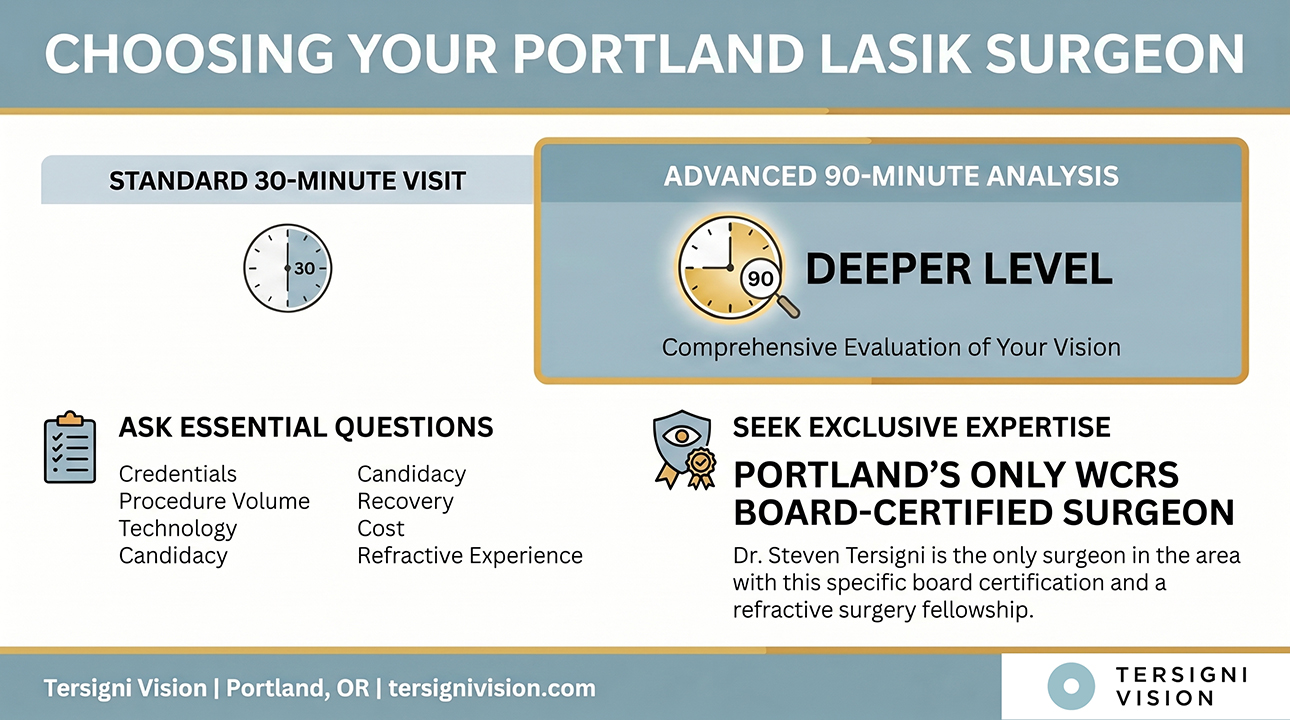
The decision to have LASIK vision correction surgery is a significant one, and the success of your procedure will be greatly influenced by the surgeon you select. When comparing LASIK providers, it is crucial to make an educated decision and to ask important questions. Asking questions and learning what makes one LASIK surgeon different from another is essential because not all LASIK surgeons are the same. We at Tersigni Vision want to give you the information you need in order to feel comfortable choosing to have LASIK surgery with our highly trained and experienced surgeon, Dr. Tersigni. When looking for a LASIK surgeon, it’s important to ask the following questions.

Who will be performing my surgery, and do they only work in this office?

Is your surgeon based at the LASIK facility you’ll be using? Or does he take a flight into the city and back out after performing your procedure? It is important to know precisely who will be operating on your eyes during LASIK. Avoid LASIK Eye Centers with LASIK Surgeons based in different cities and states. These ophthalmologists often fly in, perform your procedure, and then leave again. What if you need to see your surgeon right away? Most likely, you will not be able to see them, and you will need to consult with another LASIK surgeon or technician.

Every piece of LASIK equipment is different, which is another disadvantage of “traveling surgeons.” Even though your surgeon may use the same brand of equipment in all of their offices, each unit has a slightly different calibration. Tersigni Vision is the only place Dr. Tersigni performs refractive surgery. He will be available to you before, during, and after your LASIK procedure. Dr. Tersigni also has a deep understanding of the laser technology used in our office and records each surgery in a database so we can monitor the accuracy for each patient.

What training does the surgeon who will be performing LASIK on your eyes have?

It’s essential to find out as much as you can about the background of the surgeon doing the procedure. Each surgeon must adhere to certain standards, but their level of expertise varies. Credentials are always important when choosing a doctor. When selecting a LASIK surgeon to operate on your eyes, qualifications are critical.

One qualification is board certification from the American Board of Ophthalmology. Board-certified LASIK specialists have completed years of surgical training, obtained their medical degree from a reputable institution, and regularly participate in continuing education seminars to stay current on the most recent advancements in laser vision correction. Even more important, though, is whether your surgeon has received specialized training in refractive surgery and vision correction. Not all eye surgeons receive the specialized training needed to be an expert in LASIK and vision correction surgery. Your surgeon ideally should have fellowship training in the field in which they specialize.

Come see what you’re missing.

Do you solely perform LASIK, or do you provide the entire range of refractive surgery options?

Knowing whether the vision correction surgeon you are considering for your vision correction solely does LASIK or provides a broad range of LASIK alternatives is important. Working with a surgeon who not only offers LASIK but also its cutting-edge alternatives is vital because there is no one method of vision correction that is optimal for all patients. Some doctors who solely perform LASIK eye surgery may frequently try to fit you into a LASIK procedure, even if it isn’t the best option for your particular needs. At Tersigni Vision, we are experts in a variety of vision correction surgery techniques and strive to provide the best results for every patient. We are the only center in Oregon to provide the full portfolio of vision correction options. We will never advise you to have a procedure for which you are not a good candidate and will instead work with you to identify the procedure that best suits your needs and vision objectives.

Not a candidate for LASIK? Don’t worry; you’ve come to the right place. Your LASIK alternatives at Tersigni Vision include SMILE eye surgery, Photorefractive Keratectomy (PRK procedures), ICL, and Refractive Lens Exchange. Let’s put an end to fuzzy eyesight so you can see properly and live your life to the fullest.

Why is finding a surgeon who performs other procedures in addition to LASIK important?

Your vision correction surgery should be tailored to your unique needs; thus, it’s crucial to find a surgeon that performs LASIK and its alternatives. Not everyone is a candidate for laser surgery, and that’s okay! Even though it may be discouraging to learn that you are not a candidate for LASIK, it is much better to have a surgeon who is straightforward with you and prioritizes your individual needs over their own financial interests.

When doctors pressure a patient into a vision correction procedure for which they are not a good candidate, it might result in complications and the requirement for additional corrective surgery. When discussing LASIK, it’s important to be upfront and truthful with your eye doctor about your medical background. A competent refractive surgeon will want to make sure that you are a strong candidate for the operation and that you have a good chance of having a successful outcome.

Dr. Tersigni is an expert surgeon in not only LASIK but also EVO ICL surgery, SMILE, PRK, and Refractive Lens Exchange. Many patients come to us after they have been told they are not a candidate at another center. Our patients will always leave our office feeling encouraged that there is hope for clearer vision and informed of all of their options for vision correction.

How many LASIK surgeries have you performed?

We realize that everyone started somewhere, but the surgeons’ credentials and experience should speak for themselves. Ideally, your LASIK surgeon should have completed thousands of procedures. Furthermore, he or she ought to be performing them frequently, which shows that their skills are “in shape.”

In light of this, “Do you ever decline a patient’s request for LASIK surgery?” is one of the greatest questions you can ask. In a perfect world, the answer would be “Yes, I have.” The fact is that not every patient is a good candidate for LASIK surgery.

If the surgeon asserts that no patient has ever been turned away, this may be a sign that financial gain takes precedence over the patient’s overall success and long-term well-being, and you should find another surgeon. The health and safety of the patient are the top priorities of a great LASIK surgeon.

Dr. Tersigni is not only a surgeon but also an educator and researcher. He has written for and edited content for a wide variety of medical educational publications and websites and has been published in national journals. He has been involved in multiple U.S. FDA trials involving advanced technology lens implants, corneal treatments, and investigational therapeutic medications, among other studies.

How in-depth is the eye exam at the initial LASIK consultation?

Many LASIK facilities only do two tests to see if you qualify for the procedure. To ensure that LASIK is the best procedure for your eyes, it is crucial to get a comprehensive eye examination that includes multiple tests.

Our procedure differs significantly from a typical LASIK consultation. According to our patients, this is the most cutting-edge and in-depth eye exam they’ve ever experienced. Most places do two or three tests on your eyes to determine if you are a candidate for LASIK because LASIK is all they do. At Tersigni Vision, we provide the complete range of contemporary vision correction options. Therefore, we do up to 9 separate scans and test on your eyes to thoroughly examine them from the front to the back. You will spend around a half-hour with your vision correction surgeon, Dr. Tersigni, after all of your scans, measurements, and tests to discuss which vision correction options are ideal for you.

What is your success rate for the LASIK procedure?

Laser eye surgeries can improve visual acuity, visual perception and fix a variety of vision issues, including astigmatism, nearsightedness, and farsightedness. Your surgeon should have had success using LASIK surgery to treat patients with the type of refractive error and severity of vision impairment that you have. Knowing that the surgeon has successfully conducted hundreds or maybe thousands of LASIK procedures on people with comparable vision problems will put your mind at ease.

How much does the initial consultation cost to determine if I’m a candidate for LASIK cost?

To draw clients to their laser eye surgery center, many laser eye surgery specialists offer free initial LASIK consultations. Unfortunately, this can be a little misleading because at these kinds of vision centers, the costs associated with your testing and examination are ultimately passed on to the patient. LASIK surgeons and their employees frequently use aggressive sales techniques and recommend a surgery that may not be the most suitable for you in order to avoid losing money on the free consultation.

Tersigni Vision emphasizes open communication and upfront costs. Every step of the way, we provide high-quality medical services and will only suggest a procedure if it is really the best option for your eyes.

What does the LASIK cost include?

Make sure the LASIK pricing is all-inclusive when comparing costs, which means that it covers the operation as well as preoperative and postoperative services. This ensures there are no unpleasant surprises and that you receive the best care possible. Pricing with restrictions or exceptions can put your finances in danger and lead to unforeseen extra costs.

With all-inclusive pricing, you can relax knowing that all of your needs will be met. Costs should typically include all clinic visits before, during, and after the surgery. You may wish to look into the following coverage options if you’re researching all-inclusive surgery rates:

  • Prescriptions needed before and after the procedure, in addition to anesthesia (numbing eyedrops)
  • Cost of facilities and personnel
  • Items that are disposed of after use, like gloves and medical gowns
  • Cost of using lasers. Sometimes there is a small additional fee to utilize the laser

At Tersigni Vision, there won’t be any unforeseen costs before, during, or after the LASIK eye surgery because our prices are all-inclusive. Additionally, working with a team of professionals who are dedicated to providing you with high-quality service throughout the entire process will give you the peace of mind you need.

What type of LASIK technology do you use?

Technology for vision correction is ever-evolving. Modern techniques like All-laser LASIK and wavefront LASIK allow eye doctors to tailor the course of treatment to be more precise and accurate. A skilled LASIK surgeon invests in the most modern technology and advancements to provide a safe patient experience and great visual acuity results. Femtosecond laser flaps help to produce a result that is safer. It is essential to use wavefront lasers with the most recent software upgrades.

The most cutting-edge excimer laser and vision correction technologies are used by Tersigni Vision, and they are so accurate that they can etch letters on a human hair strand. All of this cutting-edge LASIK technology, though, is useless without a qualified, knowledgeable LASIK surgeon like Dr. Tersigni to program and guide it.

How do you determine if a patient is a good candidate for LASIK?

LASIK may be a fantastic procedure for you if you have reached ocular maturity (often about age 18), have a healthy cornea, and have nearsightedness, farsightedness, presbyopia, or astigmatism. Additionally, your contact lens or eyeglass prescription must show that your eyes have been somewhat stable for the past year or so.

At Tersigni Vision, your initial visit includes a comprehensive diagnostic workup using the most modern technology and up to nine different tests to assess your eye health. After having your eyes assessed, you will meet with Dr. Tersigni, your surgeon, to discuss the perfect vision correction technique created just for you as well as other valuable information relevant to the health of your eyes.

How do you handle follow-up care and monitoring of the patient’s progress?

After undergoing a LASIK procedure, patients should schedule follow-up appointments with their LASIK surgeon. These post-operative visits with the surgeon help them make sure the patients are healing properly and without any complications. If any issues are discovered by an eye surgeon at a follow-up visit, they can be resolved immediately.

During these follow-up visits, patients are advised to share any questions or concerns they may have. This is an excellent method for assisting individuals in their recovery and discovering issues before they become more serious. For the best continuity of care, it is necessary to schedule an appointment with the surgeon who performed your treatment. It is not ideal and can lead to misunderstanding for both the patient and the provider if the surgeon you use for your LASIK surgery only sees you during the operation and not before or after.

You will see your surgeon at Tersigni Vision before, during, and after your LASIK treatment. Dr. Tersigni is available to respond to concerns and make sure your recovery is going as planned.

Come See What You’re Missing…

Do not settle for a one-size-fits-all approach to vision correction. Come see what refractive surgeries Tersigni Vision has to offer, whether you have worn glasses since the second grade, you just started wearing bifocals or reading glasses, or you have been informed you are not a candidate for LASIK. You really can have clear vision and get rid of contact lenses or glasses. Come see what you’re missing. More options. Less confusion. Maximum care.


source https://www.tersignivision.com/lasik/best-lasik-near-me-questions-to-ask-to-find-the-best-lasik-surgeon-for-you/

What questions should I ask during my LASIK consultation in Portland?

A LASIK consultation is the main opportunity to evaluate a surgeon before committing to surgery. The questions a patient brings — and how t...