Tuesday, April 4, 2023

Custom Lens Replacement Surgery Costs in Portland

The cost of a Custom Lens Replacement (also known as Refractive Lens Exchange or RLE) is a common concern for those who are thinking about having surgery done to improve their eyesight. At Tersigni Vision, we believe in being straightforward and minimizing confusion regarding the various vision correction surgery choices available. We provide individualized treatment, and Dr. Tersigni is one of the best refractive surgeons in the Portland area, with years of experience in vision correction surgery. Contact our office now for additional information and to book an appointment to determine whether you are a good candidate for Custom Lens Replacement. You really can say goodbye to contact lenses and glasses once and for all.

What is a Custom Lens Replacement?

Custom lens replacement surgery, also known as refractive lens exchange (RLE), is a surgical procedure that replaces the eye’s natural lens with an artificial lens. A custom lens replacement procedure involves the removal of the natural lens of the eye and its replacement with an artificial lens implant. The lens used in the surgery is called an artificial intraocular lens (IOL) and is designed to correct the specific refractive error of the individual undergoing the procedure.

The procedure is also known as refractive lens exchange (RLE) and it is similar in some ways to a cataract surgery procedure but is performed on individuals who do not have cataracts. Unlike cataract surgery, which is typically performed when the natural lens of the eye has become cloudy due to the development of cataracts, custom lens replacement surgery is performed to correct refractive errors, such as nearsightedness, far-sightedness, presbyopia, or astigmatism. It also provides the wonderful benefit of preventing future cataract development.

Custom lens replacement surgery is performed as an outpatient procedure, meaning that the individual undergoing the surgery can go home the same day. The procedure is performed under local anesthesia and typically takes less than an hour to complete. During the procedure, a small incision is made in the cornea, and the natural lens of the eye is removed using advanced technology.

Once the natural lens has been removed, an artificial lens is inserted into the eye. The type of lens used will depend on a number of different factors, including the specific refractive error of the individual undergoing the surgery, the shape of their eye, as well as their visual goals. For example, if the individual is nearsighted, a lens that corrects for near-sightedness will be used. If the individual has astigmatism, a toric lens will be used to correct astigmatism. The lens selected may also depend on the individual’s lifestyle and vision goals.

After the artificial lens has been implanted, the incision is closed using a self-sealing technique. The individual will typically only need to wear a protective eye shield when they sleep for a few nights after the surgery to protect the eye while it heals.

How Much Does a Custom Lens Replacement Cost?

When it comes to custom lens replacement, the cost can vary widely depending on a number of factors. Some of these factors include the type of lens being replaced, the material used in the replacement lens, the patient’s refractive error, and the level of customization required.

There are several types of materials that can be used, including silicone, acrylic, and PMMA (polymethyl methacrylate).

The level of customization required for the replacement lens will also affect the refractive lens exchange cost. Some patients may require a simple replacement lens that is designed to correct a specific vision problem, while others may require a more complex lens that is tailored to their specific needs.

For example, patients with astigmatism may require a toric lens, which is designed to correct this specific vision problem. These lenses tend to be more expensive than standard replacement lenses. Patients who require a multifocal lens, which is designed to correct both near and far vision, will also typically pay more for their replacement lens.

There are several other factors that can affect the custom lens replacement surgery cost. These include the location of the procedure, the experience of the surgeon, and any additional fees or charges associated with the procedure.

For example, if you live in a high-cost area, such as a major city, you may pay more for your custom lens replacement than if you lived in a smaller town. Similarly, if you choose a highly experienced surgeon to perform the procedure, you may pay more for their services and expertise.

Finally, it is important to be aware of any additional fees or charges that may be associated with the procedure. For example, some surgeons may charge an additional fee for pre-operative testing, while others may charge a separate fee for anesthesia. At Tersigni Vision, we believe in upfront and transparent pricing that is all-inclusive, so there are no hidden fees or unpleasant surprises.

So, how much can you expect to pay for custom lens replacement? As we’ve seen, the cost can vary widely depending on a number of factors. However, on average, you can expect to pay anywhere from $5,000 to $10,000 per eye for refractive lens exchange.

The cost of RLE surgery is less than what the average person would spend over a lifetime on glasses, contact lenses, solutions, and related eye exams. Not to mention the additional “costs” of worrying about having enough contacts for a trip, searching for and replacing misplaced glasses, and dealing with contact lens-related infections. With glasses and contacts, your eyesight is rented over time, and developing cataracts will eventually happen to everyone. With RLE, you are able to own your vision. Use our vision correction calculator to see how affordable RLE can be at Tersigni Vision.

Come see what you’re missing.

More FAQ’s about Custom Lens Replacement Surgery Costs in Portland

Does Insurance Pay for Custom Lens Replacement Surgery?

In general, RLE is considered an elective procedure and is not typically covered by insurance unless it is deemed medically necessary. If the patient has a condition that affects their ability to perform daily activities, insurance may cover the procedure. However, if the patient is undergoing RLE for vision correction purposes only, insurance is unlikely to cover the cost. It is important to check with your insurance provider to determine whether RLE is covered under your plan.

Can a custom lens replacement surgery save money?

CLR surgery can be a significant investment, but for many people, it can actually save money over the long term. Here’s how:

Reduced Dependence on Glasses and Contacts

One of the biggest advantages of custom lens replacement surgery is that it can reduce or eliminate your dependence on glasses, contacts and reading glasses. Over time, the cost of these corrective lenses can add up, especially if you need to replace them frequently or if you require specialized lenses such as bifocals. When you take into account changing eyeglass prescriptions and contact lens solutions over the course of your lifetime, the expenses really start to increase. By reducing your reliance on glasses and contacts, you can save money on these ongoing expenses.

Long-Term Savings

While custom lens replacement surgery may be more expensive upfront than other vision correction procedures, such as LASIK eye surgery or Photorefractive keratectomy (PRK), it can actually save you money over the long term. Unlike LASIK laser eye surgery or PRK, which typically only corrects vision until the eyes age, custom lens replacement is a permanent solution. This means that you won’t need to have the procedure repeated in the future, which can save you money on additional surgeries and ongoing corrective treatments.

Improved Quality of Life

Custom lens replacement surgery can also improve your quality of life, which can be invaluable. With improved visual perception, you may be able to perform daily tasks more easily and with less frustration, such as driving, reading, or participating in hobbies without blurred vision. This can lead to increased productivity, improved mood, and a greater sense of independence and self-esteem.

What are the payment options for custom lens replacement surgery?

The payment options for custom lens replacement surgery may vary depending on the specific clinic or surgeon you choose. In general, payment options may include paying the full cost upfront, using a credit card, using your FSA or HSA account to pay for it, or financing through a healthcare financing company, such as CareCredit or Alphaeon Credit. Some clinics may also offer payment plans or financing options to help make the out of pocket expense more manageable. It is important to speak with your surgeon or clinic about payment options and any associated fees or interest rates to determine the best option for your budget and needs.

At Tersigni Vision, our goal is to make vision correction procedures fit any budget. We offer a variety of payment options, including interest-free financing plans. Patients can choose to pay with zero down payment and 0% for 24 months or zero down payment and low monthly payments with a fixed interest rate for 60 months. In addition, we accept cash, check, debit or credit cards, HSA, FSA, MSA, and HRA. When it comes to correcting your vision in Portland, you have options. Allow our knowledgeable team at Tersigni Vision to assist you in finding the optimal solution for your eyes.

What to Expect During and After Custom Lens Replacement Surgery?

Before the surgery, the patient will typically undergo a comprehensive eye exam to determine their candidacy for the surgery. The eye exam may include a review of the individual’s medical history, a visual acuity test, a refraction test, and a dilated eye exam. The individual may also need to undergo additional testing, such as an optical coherence tomography (OCT) scan, to help the surgeon determine the appropriate type of lens to use.

During the surgery, most patients will typically feel little to no pain. The eye will be numbed using eye drops and gel, and the individual may be given medication to help them relax during the procedure. After the surgery, the patient may experience some slight irritation, such as mild pain or itching, but this can typically be managed with over-the-counter pain medication or artificial tears.

Typically, lens replacement patients can see well the next day and can resume most normal activities, with a few exceptions. It is important to follow all post-operative instructions provided by the surgeon, including using prescribed eye drops and avoiding certain activities, such as heavy lifting or swimming, for a period of time after the surgery. The individual will also need to attend follow-up appointments with the surgeon to ensure that the eye is healing properly.

Tersigni Vision is the only vision correction center in Portland that offers the full spectrum of vision correction solutions, enabling us to tailor your vision correction approach to your specific needs and provide you with clear vision. We take great pride in providing personalized care, and you will never feel forced to proceed with any type of refractive surgery unless you are ready. Dr. Tersigni will meet with you personally and answer all of your concerns and offer his expert opinion on the best course of action for you. Give us a call to learn more about the advantages of Custom Lens Replacement and to arrange an appointment for a thorough eye exam. Start your path to visual independence today, and you’ll be on your way to freedom from your glasses and contacts.


source https://www.tersignivision.com/lasik/custom-lens-replacement-surgery-costs-in-portland/

Tuesday, March 21, 2023

Eye Surgeon Portland: How To Know You Are In Good Hands With A Refractive Surgery Ophthalmologist

When entrusting your eyesight to a refractive surgeon, it is essential to know their qualifications, training, and other experience that make them the best choice for your vision correction procedure. Your vision is priceless, and the refractive surgeon who is charged with making it even better should feel the same way. In this article, we will discuss important questions to consider when determining what sets some refractive surgeons apart from others.

Clearer vision can be life-changing, and the good news is that it is attainable! We have more options, give clear answers, and will take care of you every step of the way at Tersigni Vision. Visit our office to see for yourself the Tersigni Vision difference. Call now to schedule your consultation and start your journey to visual freedom.

What level of education is needed to become an ophthalmologist who performs refractive surgery?

Both eye doctors and eye surgeons are known as ophthalmologists. They could be Doctors of Osteopathy (D.O.) or Doctors of Medicine (M.D.). An eye doctor must typically have four years of pre-medical undergraduate study, four years of medical school, one year of internship, and three or more years of specialized medical and surgical training in eye care as a resident in ophthalmology. The prospective ophthalmologist gains extensive knowledge of eye health, eye conditions, eye disease medications, and vision care treatments throughout this training, in addition to learning how to perform eye surgery. After these 12 years of training, many then enroll in specialized fellowship programs to become experts in various subspecialties, such as retina surgery, glaucoma, or pediatric eye care. In the case of LASIK specialists, they will typically complete a fellowship in corneal and refractive surgery in order to gain more experience before working in this extremely specialized field.

Dr. Tersigni earned his medical degree and a master’s in public health at Tulane University’s School of Medicine in New Orleans after graduating cum laude from the University of Oregon. He completed his internship at the Sacred Heart Medical Center in Spokane, Washington, and then went on to the Ira G. Ross Eye Institute in Buffalo, New York, for his ophthalmology residency training. Dr. Tersigni then completed a fellowship in anterior segment and refractive surgery at Chu Vision Institute in Minneapolis, Minnesota, under the guidance of renowned vision correction specialist Dr. Y. Ralph Chu. He also received training in all available vision correction techniques during his time at this eye clinic.

Come see what you’re missing.

What significance do refractive surgeons place on continuing education?

The American Board of Ophthalmology and most state medical boards require its members to complete continuing education courses each year in order to continue to practice. As new technologies and treatments develop for an eye specialist to use, it is important that your surgeon is actively participating in continuing education and staying up to date with the latest advancements in ophthalmology and refractive surgery. Both doctors of Optometry and Opthalmology have continuing education requirements that differ according to their states.

Dr. Tersigni places a high value on continuing education as not only an educator but also a researcher. He continues to expand his knowledge and expertise through continuing medical education courses and takes pride in being a life-long learner.

What further qualifications are important for a refractive surgeon to have?

While many LASIK doctors promote the number of surgeries they have performed as a key factor in selecting them, this should not be the sole basis for your decision to choose them. You may find that many of these high-volume LASIK surgery centers solely perform LASIK eye surgery, which may not be the best option for your unique needs. Refractive surgeons who offer more than just LASIK are able to give a recommendation on what vision correction treatment would be best for your individual vision needs instead of just squeezing you into a LASIK procedure.

In addition, it is equally important to consider the surgeon’s professional qualifications and contributions (such as research, teaching, and training).

Dr. Tersigni is a researcher and educator. He has written for and edited articles for many medical and educational publications and websites, in addition to having work published in national journals. Tersigni Vision is also the only vision correction center in Oregon to provide the full portfolio of modern vision correction options.

Why do certain ophthalmologists who do refractive surgery take part in FDA clinical studies?

Surgeons who specialize in laser vision, refractive surgery, and cataract surgery who have taken part in FDA clinical studies are a very distinct and exclusive group. Because the vast majority of eye surgeons in the United States do not participate in FDA investigative studies, there is a significant difference between many surgeons. Out of an estimated 13,000 ophthalmologists in the United States, it is believed that as few as 300 and possibly no more than 500 eye doctors have participated in FDA studies as principal or co-investigator.

Manufacturers of lasers, lens implants, surgical tools, and pharmaceuticals, like Alcon, Visx, Bausch & Lomb, Nidek, and Wavelight, invest millions of dollars to get their ophthalmic products FDA-approved. This is in addition to the millions they spend on research, invention, and patenting their products. These manufacturers must be very careful when selecting eye doctors to be clinical investigators for these FDA studies due to the significant investment they make in testing, producing, securing patents, and receiving FDA approval. Simply put, surgeons who participate in FDA clinical studies are trusted by laser manufacturers and other producers of ophthalmic devices, products, and pharmaceuticals because of their training, credentials, and reputation.

These companies specifically choose eye doctors who are highly qualified, experienced in the techniques used in FDA studies, and familiar with the stringent examination and follow-up requirements of FDA studies. The laser, refractive, and cataract surgeons chosen by these businesses are reputable experts in their fields who uphold the highest standards of professionalism and integrity.

Surgeons with expertise in laser vision correction, refractive surgery, and cataract surgery are often called upon to lead or assist in FDA clinical studies as principal investigators or co-investigators. These test locations may be private laser clinics or institutions with affiliations to prestigious universities or hospitals. Many of these surgeons will be invited to speak on behalf of the companies when the FDA reviews the data before approving the laser eye surgery that is the subject of the study.

Dr. Tersigni has participated in ten FDA trials conducted in the United States, including ones involving corneal treatments, investigational therapeutic medications, and advanced technology lens implants.

Is it vital to have the most up-to-date technology when having refractive surgery?

Not every LASIK surgeon has access to or makes investments in cutting-edge technology. Inquire specifically about the laser vision correction technology that your LASIK surgeon uses and why one type may be preferable for the procedure you desire.

Data provided by the technology used during initial eye examinations help doctors decide whether a patient is a candidate for refractive surgery. The diagnostic technology helps the doctor determine which procedure would probably be the best short- and long-term option for that patient in addition to assisting with the patient’s candidacy determination.

The diagnostic technology used by LASIK facilities varies. The analysis of the cornea is crucial for LASIK. Make certain that the LASIK provider you are thinking about uses the most recent technology for all LASIK evaluations.

It is also important to ask what technology is used for the creation of the corneal flap during the LASIK procedure. When LASIK first became popular, the corneal flap was made using an automated tool called a microkeratome, which used a blade to cut the patient’s cornea.

Modern microkeratomes don’t use blades; instead, they create the corneal flap using a femtosecond laser. Almost all LASIK surgeons concur that cutting the corneal flap using a blade is less precise and riskier than creating it with a laser. Patients should look for doctors who use this cutting-edge method of corneal flap technology.

Also crucial to LASIK is the excimer laser technology that will be utilized to reshape the patient’s cornea, effectively eliminating the need for eyeglasses. This is where most of the action takes place in establishing the patient’s visual result after surgery. Modern lasers have improved eye-tracking capabilities. The laser treatments can then be precisely targeted where the surgeon needs them, and patients no longer have to worry about accidentally moving during the procedure.

Much less time is needed for treatment thanks to faster lasers. As a result, patients can typically wake up the day after LASIK therapy with 20/20 or greater vision, and the recuperation period is significantly shorter. It is important to ask about the technology a potential LASIK surgeon will be using.

Dr. Tersigni uses the most advanced technology available for all refractive surgery procedures performed at Tersigni Vision. From your comprehensive eye examination to your procedure, you can be assured the technology used at Tersigni Vision is the most cutting-edge and advanced in refractive surgery.

Why is it important for a refractive surgeon to be a member of professional organizations like the American Academy of Ophthalmology?

Members of professional societies for vision and general eye care are more likely to be informed of recent developments in refractive and cataract surgery, such as LASIK and other refractive eye treatments. The official publications of these organizations are included as part of membership, and member surgeons are entitled to discounted attendance at the national annual meetings of these societies. One of the greatest methods for surgeons to stay current with the most recent developments in the ever-evolving area of refractive and cataract eye surgery is attending these meetings and reading these journals.

Dr. Tersigni is a member of the Refractive Surgery Alliance, a global organization comprised of the top vision correction surgeons from around the world, as well as the American Society of Cataract and Refractive Surgeons and the American Academy of Ophthalmology.

Clearer vision is just a phone call away. Come meet Dr. Tersigni in our Portland, Oregon, location and see what makes Tersigni Vision different. Call to schedule your appointment and learn more about all that we have to offer. We look forward to meeting you soon and helping you achieve freedom from contact lenses or glasses.


source https://www.tersignivision.com/lasik/eye-surgeon-portland-how-to-know-you-are-in-good-hands-with-a-refractive-surgery-ophthalmologist/

Friday, February 10, 2023

Best LASIK in Portland: Questions to Ask to Find the Best LASIK Surgeon for You

The most popular type of laser eye surgery, LASIK (laser-assisted-in-situ keratomileusis), is the best choice for many of the individuals in the Pacific Northwest who have common vision issues such as nearsightedness (myopia), farsightedness (hyperopia), and even astigmatism. The United States Food and Drug Administration has given its approval for this type of laser vision correction procedure that successfully corrects refractive errors and gives patients the ability to do away with or lessen their reliance on glasses or contacts. The majority of Portland LASIK patients enjoy 20/20 vision without the use of corrective lenses after their procedure.

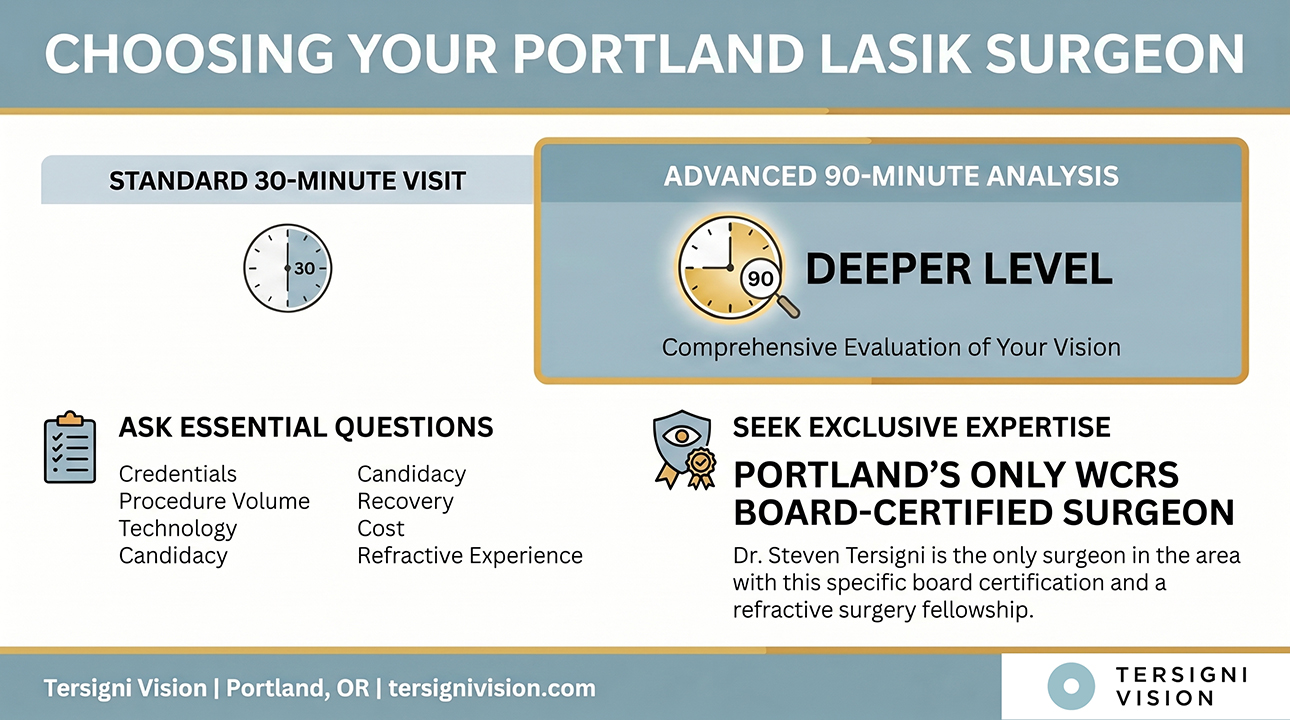
The decision to have LASIK vision correction surgery is a significant one, and the success of your procedure will be greatly influenced by the surgeon you select. When comparing LASIK providers, it is crucial to make an educated decision and to ask important questions. Asking questions and learning what makes one LASIK surgeon different from another is essential because not all LASIK surgeons are the same. We at Tersigni Vision want to give you the information you need in order to feel comfortable choosing to have LASIK surgery with our highly trained and experienced surgeon, Dr. Tersigni. When looking for a LASIK surgeon, it’s important to ask the following questions.

Who will be performing my surgery, and do they only work in this office?

Is your surgeon based at the LASIK facility you’ll be using? Or does he take a flight into the city and back out after performing your procedure? It is important to know precisely who will be operating on your eyes during LASIK. Avoid LASIK Eye Centers with LASIK Surgeons based in different cities and states. These ophthalmologists often fly in, perform your procedure, and then leave again. What if you need to see your surgeon right away? Most likely, you will not be able to see them, and you will need to consult with another LASIK surgeon or technician.

Every piece of LASIK equipment is different, which is another disadvantage of “traveling surgeons.” Even though your surgeon may use the same brand of equipment in all of their offices, each unit has a slightly different calibration. Our Portland, Oregon office is home to Tersigni Vision and is the only place Dr. Tersigni performs refractive surgery. He will be available to you before, during, and after your LASIK procedure. Dr. Tersigni also has a deep understanding of the laser technology used in our office and records each surgery in a database so we can monitor the accuracy for each patient.

What training does the surgeon who will be performing LASIK on your eyes have?

It’s essential to find out as much as you can about the background of the surgeon doing the procedure. Each surgeon must adhere to certain standards, but their level of expertise varies. When choosing a doctor, credentials are always important. When selecting a LASIK surgeon to operate on your eyes, qualifications are critical.

One qualification is board certification from the American Board of Ophthalmology. Board-certified LASIK specialists have completed years of surgical training, obtained their medical degree from a reputable institution, and regularly participate in continuing education seminars to stay current on the most recent advancements in laser vision correction. Even more important, though, is whether your surgeon has received specialized training in refractive surgery and vision correction. Not all eye surgeons receive the specialized training needed to be an expert in LASIK and vision correction surgery. Your surgeon ideally should have fellowship training in the field in which they specialize.

Come see what you’re missing.

Do you solely perform LASIK, or do you provide the entire range of refractive surgery options?

Knowing whether the vision correction surgeon you are considering for your vision correction solely does LASIK or provides a broad range of LASIK alternatives is important. Working with a surgeon who not only offers LASIK but also its cutting-edge alternatives is vital because there is no one method of vision correction that is optimal for all patients. Some doctors who solely perform LASIK eye surgery may frequently try to fit you into a LASIK procedure, even if it isn’t the best option for your particular needs. At Tersigni Vision, we are experts in a variety of vision correction surgery techniques and strive to provide the best results for every patient. We are the only center in Oregon to provide the full portfolio of vision correction options. We will never advise you to have a procedure for which you are not a good candidate and will instead work with you to identify the procedure that best suits your needs and vision objectives.

Not a candidate for LASIK? Don’t worry; you’ve come to the right place. Your LASIK alternatives at Tersigni Vision include SMILE eye surgery, Photorefractive Keratectomy (PRK procedures), ICL, and Refractive Lens Exchange. Let’s put an end to fuzzy eyesight so you can see properly and live your life to the fullest.

Why is finding a surgeon who performs other procedures in addition to LASIK important?

Your vision correction surgery should be tailored to your unique needs; thus, it’s crucial to find a surgeon that performs LASIK and its alternatives. Not everyone is a candidate for laser surgery, and that’s okay! Even though it may be discouraging to learn that you are not a candidate for LASIK, it is much better to have a surgeon who is straightforward with you and prioritizes your individual needs over their own financial interests.

When doctors pressure a patient into a vision correction procedure for which they are not a good candidate, it might result in complications and the requirement for additional corrective surgery. When discussing LASIK, it’s important to be upfront and truthful with your eye doctor about your medical background. A competent refractive surgeon will want to make sure that you are a strong candidate for the operation and that you have a good chance of having a successful outcome.

Dr. Tersigni is an expert surgeon in not only LASIK but also EVO Visian ICL surgery, SMILE, PRK, and Refractive Lens Exchange. Many patients come to us after they have been told they are not a candidate at another center. Our patients will always leave our office feeling encouraged that there is hope for clearer vision and informed of all of their options for vision correction.

How many LASIK surgeries have you performed?

We realize that everyone started somewhere, but the surgeons’ credentials and experience should speak for themselves. Ideally, your LASIK surgeon should have completed thousands of procedures. Furthermore, he or she ought to be performing them frequently, which shows that their skills are “in shape.”

In light of this, “Do you ever decline a patient’s request for LASIK surgery?” is one of the greatest questions you can ask. In a perfect world, the answer would be “Yes, I have.” The fact is that not every patient is a good candidate for LASIK surgery.

If the surgeon asserts that no patient has ever been turned away, this may be a sign that financial gain takes precedence over the patient’s overall success and long-term well-being, and you should find another surgeon. The health and safety of the patient are the top priorities of a great LASIK surgeon.

Dr. Tersigni is not only a surgeon but also an educator and researcher. He has written for and edited content for a wide variety of medical educational publications and websites and has been published in national journals. He has been involved in multiple U.S. FDA trials involving advanced technology lens implants, corneal treatments, and investigational therapeutic medications, among other studies.

How in-depth is the eye exam at the initial LASIK consultation?

Many LASIK facilities only do two tests to see if you qualify for the procedure. To ensure that LASIK is the best procedure for your eyes, it is crucial to get a comprehensive eye examination that includes multiple tests.

Our procedure differs significantly from a typical LASIK consultation. According to our patients, this is the most cutting-edge and in-depth eye exam they’ve ever experienced. Most places do two or three tests on your eyes to determine if you are a candidate for LASIK because LASIK is all they do. At Tersigni Vision, we provide the complete range of contemporary vision correction options. Therefore, we do up to 9 separate scans and test on your eyes to thoroughly examine them from the front to the back. You will spend around a half-hour with your vision correction surgeon, Dr. Tersigni, after all of your scans, measurements, and tests to discuss which vision correction options are ideal for you.

What is your success rate for the LASIK procedure?

Laser eye surgeries can improve visual acuity, visual perception and fix a variety of vision issues, including astigmatism, nearsightedness, and farsightedness. Your surgeon should have had success using LASIK surgery to treat patients with the type of refractive error and severity of vision impairment that you have. Knowing that the surgeon has successfully conducted hundreds or maybe thousands of LASIK procedures on people with comparable vision problems will put your mind at ease.

How much does the initial consultation cost to determine if I’m a candidate for LASIK cost?

To draw clients to their laser eye surgery center, many laser eye surgery specialists offer free initial LASIK consultations. Unfortunately, this can be a little misleading because at these kinds of vision centers, the costs associated with your testing and examination are ultimately passed on to the patient. LASIK surgeons and their employees frequently use aggressive sales techniques and recommend a surgery that may not be the most suitable for you in order to avoid losing money on the free consultation.

Tersigni Vision emphasizes open communication and upfront costs. Every step of the way, we provide high-quality medical services and will only suggest a procedure if it is really the best option for your eyes.

What does the LASIK cost include?

Make sure the LASIK pricing is all-inclusive when comparing costs, which means that it covers the operation as well as preoperative and postoperative services. This ensures there are no unpleasant surprises and that you receive the best care possible. Pricing with restrictions or exceptions can put your finances in danger and lead to unforeseen extra costs.

With all-inclusive pricing, you can relax knowing that all of your needs will be met. Costs should typically include all clinic visits before, during, and after the surgery. You may wish to look into the following coverage options if you’re researching all-inclusive surgery rates:

  • Prescriptions needed before and after the procedure, in addition to anesthesia (numbing eyedrops)
  • Cost of facilities and personnel
  • Items that are disposed of after use, like gloves and medical gowns
  • Cost of using lasers. Sometimes there is a small additional fee to utilize the laser

At Tersigni Vision, there won’t be any unforeseen costs before, during, or after the LASIK eye surgery because our prices are all-inclusive. Additionally, working with a team of professionals that are dedicated to providing you with high-quality service throughout the entire process will give you the peace of mind you need.

What type of LASIK technology do you use?

Technology for vision correction is ever-evolving. Modern techniques like All-laser LASIK and wavefront LASIK allow eye doctors to tailor the course of treatment to be more precise and accurate. A skilled LASIK surgeon invests in the most modern technology and advancements to provide a safe patient experience and great visual acuity results. Femtosecond laser flaps help to produce a result that is safer. It is essential to use wavefront lasers with the most recent software upgrades.

The most cutting-edge excimer laser and vision correction technologies are used by Tersigni Vision, and they are so accurate that they can etch letters on a human hair strand. All of this cutting-edge LASIK technology, though, is useless without a qualified, knowledgeable LASIK surgeon like Dr. Tersigni to program and guide it.

How do you determine if a patient is a good candidate for LASIK?

LASIK may be a fantastic procedure for you if you have reached ocular maturity (often about age 18), have a healthy cornea, and have nearsightedness, farsightedness, presbyopia, or astigmatism. Additionally, your contact lens or eyeglass prescription must show that your eyes have been somewhat stable for the past year or so.

At Tersigni Vision, your initial visit includes a comprehensive diagnostic workup using the most modern technology and up to nine different tests to assess your eye health. After having your eyes assessed, you will meet with Dr. Tersigni, your surgeon, to discuss the perfect vision correction technique created just for you as well as other valuable information relevant to the health of your eyes.

How do you handle follow-up care and monitoring of the patient’s progress?

After undergoing a LASIK procedure, patients should schedule follow-up appointments with their LASIK surgeon. These post-operative visits with the surgeon help them make sure the patients are healing properly and without any complications. If any issues are discovered by an eye surgeon at a follow-up visit, they can be resolved immediately.

During these follow-up visits, patients are advised to share any questions or concerns they may have. This is an excellent method for assisting individuals in their recovery and discovering issues before they become more serious. For the best continuity of care, it is necessary to schedule an appointment with the surgeon who performed your treatment. It is not ideal and can lead to misunderstanding for both the patient and the provider if the surgeon you use for your LASIK surgery only sees you during the operation and not before or after.

You will see your surgeon at Tersigni Vision before, during, and after your LASIK treatment. Dr. Tersigni is available to respond to concerns and make sure your recovery is going as planned.

Come See What You’re Missing…

Do not settle for a one-size-fits-all approach to vision correction. Come see what refractive surgeries Tersigni Vision has to offer, whether you have worn glasses since the second grade, you just started wearing bifocals or reading glasses, or you have been informed you are not a candidate for LASIK. You really can have clear vision and get rid of contact lenses or glasses. Come see what you’re missing. More options. Less confusion. Maximum care.


source https://www.tersignivision.com/lasik/best-lasik-in-portland-questions-to-ask-to-find-the-best-lasik-surgeon-for-you/

Tuesday, December 6, 2022

LASIK Recovery Portland

If you’re sick and tired of wearing glasses or contacts and ready to wake up in the morning able to see clearly when you open your eyes, then LASIK surgery may be just what you’ve been dreaming of. LASIK procedures provide vision correction for people with nearsightedness (myopia), farsightedness (hyperopia), and astigmatism. Many patients are able to get rid of their glasses and contacts forever after their eyes have healed from their LASIK procedure.

Tersigni Vision, a modern vision correction boutique, is the only vision correction center in Oregon to offer the entire portfolio of modern LASIK alternatives. We take care of our patients every step of the way and will answer any and all questions from your initial LASIK consultation through your recovery process. In this article, we will discuss what LASIK eye surgery recovery is like and answer some of the most frequently asked questions about it. We would be happy to answer any other questions you may have at your LASIK consultation. Call our office to schedule an appointment for a comprehensive LASIK eye examination and get started on your journey to visual freedom.

What will happen on the day of my LASIK procedure?

You should plan to spend about two hours at Tersigni Vision in our Portland office on the day of your LASIK eye surgery, even though the process only takes about 15 minutes. You’ll also need a ride home from someone as you will not be able to drive. Occasionally we rerun some of the tests performed during your Tersigni Vision Advanced Ocular Analysis prior to the procedure beginning.

You will be given eye-numbing drops before the procedure, and a soft eyelid holder will be placed so that you won’t have to worry about blinking. The excimer laser treatment will begin the laser eye correction procedure, which takes about 20 seconds per eye. Your surgical technicians will provide you with post-operative instructions and protective eye shields to wear while you sleep for the first two nights following your LASIK surgery.

How long is the recovery from LASIK?

The initial healing time following LASIK (laser-assisted in situ keratomileusis) surgery typically lasts six to twelve hours. However, it varies from patient to patient and depends on a number of variables inlcuding the amount of inflammation. After having LASIK vision correction surgery, most patients can see clearly within 24 hours, but some require two to five days to recuperate. Following LASIK, some patients may experience blurred vision, glare or halos, and vision fluctuations for a few weeks.

As soon as the treatment is over, your eyes will begin to heal, but the overall recovery time you should expect from LASIK generally takes four to six weeks. Dr. Tersigni will monitor your healing process at your follow-up appointments and give you a better idea of your unique recovery timeline.

More FAQ’s about LASIK Recovery Portland

Is LASIK recovery painful?

The majority of LASIK patients experience little, if any, discomfort during or after their LASIK procedure. It is common to experience itchy, dry, or irritated eyes after LASIK surgery, but you should not experience severe pain at all. Your eye surgeon will give you eye drops to help alleviate any discomfort and aid in the healing process.

Can I drive 2 days after LASIK?

Each person’s recovery period is unique, and you should follow the advice given by your doctor about your unique situation, but often times you are released to drive the day after your surgery. Your eye doctor will release you to drive at your follow-up appointment if blurry vision is improved, and you are healing as expected.

What can you not do after LASIK?

Although laser vision correction is a quick, painless operation on the human eye with minimal recovery time, patients must take precautions to ensure that the healing process is as quick and painless as possible. Patients should refrain from swimming in pools, hot tubs, saunas, and other bodies of water for at least two weeks following their procedure to prevent the risk of infection, and it is advisable to wear goggles for a few weeks afterwards. We know patients are excited to return to a normal routine with clear vision, but it is important to let your eyes fully recover before resuming strenuous activity and avoid contact sports for at least a week as well.

During the first 24 to 48 hours after your LASIK procedure, you should avoid heavy usage of phone and computer screens. This will help alleviate any additional stress these types of screens put on the eye and allow your eyes to heal.

LASIK patients should try not to wear eye makeup for about one week following their surgical procedure. Your LASIK surgeon will go over the LASIK recovery time guidelines at your LASIK consultation. Follow your doctor’s advice so that your eyes heal quickly without any complications.

What should I do the first 24 hours after LASIK?

The first 24 hours after your laser eye surgery, you should use for resting, according to LASIK experts. LASIK patients should refrain from reading, using computers, engaging in vigorous activity, and watching television during this time. Wearing sunglasses is important as you will be light sensitive following your LASIK procedure. Protecting your eyes as you recover from LASIK will help keep your comfortable and aid in the healing process.

On the first day after your procedure, you can take a shower but make sure you do not get water or soap in your eyes.

Follow the directions on any prescription medication, artificial tears, or lubricating eye drops your doctor recommends.

How long after LASIK until I sleep without an eye shield?

There are two steps in the LASIK procedure approved by the Food and Drug Administration. Dr. Tersigni uses a femtosecond laser to make a corneal flap in the that gets lifted in the initial stage and the process is completed by gently resealing this flap into place. A second laser is used in the second stage of LASIK to reshape the cornea in order to correct vision.

For the first week, it’s crucial that the corneal flap not be disturbed. After 48-72 hours it is very secure, but if you press too hard on the eye in any one way, especially during the first 72 hours, you could perhaps move the flap’s edge. We advise patients to wear eye protection at night to help avoid this problem. For the first few nights after your LASIK surgery, we advise using eye shields while you sleep at night or take naps. Additionally, patients should be very cautious when dabbing their eyes and avoid applying pressure to the eye by using a clean tissue.

When can I see 20/20 after LASIK?

Recovery times can vary from person to person, but many people see 20/20 by the day after their LASIK procedure. Although visual perception is typically excellent, this does not imply that the healing process is over and patients should continue to follow their doctor’s instructions closely.

How can I speed up my LASIK eye surgery recovery time?

After LASIK eye surgery patients are excited about being able to see clearly and eager to return to a normal routine with their improved vision. Following these tips for LASIK recovery will help speed up your recovery and eliminate any setbacks along the way.

  1. Use eye shields when you sleep
  2. Reduce screen time
  3. Do not rub your eyes or touch your eyes
  4. Take it easy and rest as much as possible
  5. Attend all follow up visits
  6. Use any eye drops prescribed as directed
  7. Do not wear cosmetics or face lotion for one week
  8. Wear sunglasses when in bright light
  9. Avoid contact sports, swimming and hot tubs
  10. Follow your LASIK surgeon’s instructions

How long after LASIK can I wash my face?

In general, you should avoid cleaning your face for at least 24 hours following LASIK. When washing your face you must avoid getting soap or water in your eyes for at least a few days, just like when you take a shower. You should take your time when using face wash and rinse your cleanser off slowly and cautiously without spraying any water. Consider completely avoiding your forehead because the soap is more likely to drip down from there into your eyes. When it’s time to dry your face, pat your skin gently with a towel while avoiding your eyes.

By following the above advice, many people successfully wash their faces throughout the LASIK recovery period. There are also a few facial washing techniques eye surgeons recommend that reduce the possibility of getting anything in your eyes.

Pouring a face toner onto a cotton pad and applying it to dry skin is one way to clean your face without using water or soap. As an alternative, you can remove surplus oil and grime from your face by wiping it with a damp washcloth. Remember to stay away from your eyes with either technique.

How many days after LASIK Can I wash my hair?

The day following laser eye treatments you can wash your hair. As mentioned before, you must be extra cautious to keep soap and water out of our eyes when showering and washing your hair especially for the first week following LASIK surgery.

If you’re in the Portland area and ready to get rid of the hassle of contact lenses or glasses, call Tersigni Vision now and come see what you’re missing. Call our office today to schedule your complete eye exam and find out if you’re a good candidate for LASIK eye surgery. Our highly trained team will be with you every step of your journey to visual freedom. –


source https://www.tersignivision.com/lasik/lasik-recovery-portland/

Friday, November 11, 2022

How Much Does EVO ICL Cost?

When considering an EVO ICL procedure for life-changing vision correction, one of the questions patients often ask is how much an implantable collamer lens costs. There are several important factors to consider when talking about the cost of this vision correction procedure that makes the answer not quite as straightforward as you would think. At Tersigni Vision, we believe in being up-front and minimizing confusion when it comes to the multiple options you have for vision correction surgeries. We offer customized care, and with years of experience in vision correction surgery, Dr. Tersigni is one of the top EVO ICL surgeons in the Portland area. Call our office today for more information and to schedule your appointment to see if you are a good candidate for EVO ICL. Freedom from contact lenses and glasses can be yours.

How much does EVO ICL surgery cost?

The cost of an EVO ICL procedure can vary significantly based on the particular lens type utilized, the surgeon’s experience and skill, the location of the procedure, the patient’s present eye prescription, and other medical considerations. For the majority of people, the uv protective lenses themselves will cost between $1,000 and $1,500 per eye. The total ICL procedure price will be more once the surgeon’s time, other materials, facility fee, eye exam, and follow-up appointments are factored in. As with most things, you get what you pay for and if discounts or deals are involved you may want to ask yourself where they might be cutting corners to make up for those costs.

Making vision correction procedures affordable is our goal at Tersigni Vision. We provide a range of payment options, including financing plans with no interest. In addition to accepting cash, check, or credit cards, patients can also use their HSA (Health Savings Account), FSA (Flexible Spending Account), HRA (Health Reimbursement Account), or MSA (Medical Savings Account) to pay for their procedure. You can trust the experienced eye care professionals at Tersigni Vision to never recommend a procedure you don’t need and to always be open and upfront about our procedure costs. Intraocular lenses are an investment in your vision that will last a lifetime. Come see what you’ve been missing and experience life-changing visual perception improvements.

What is EVO ICL?

Your search for the ideal solution that gives you the visual independence you deserve could end with EVO ICL (Implantable Collamer Lens), also known as implantable contact lenses. The key distinction between EVO ICL and an external contact lens is that the EVO ICL is implanted inside the eye rather than on the outside surface, hence why it is often referred to as an implantable contact lens. You keep your natural lens and no corneal tissue is taken out as a result. The ICL is approved by the Food and Drug Administration in the United States, offers UV protection, and is positioned next to the natural lens of the eye and is covered by the iris. Many people have heard of lens replacement used for cataract surgery. However, the EVO lens is implanted when you are younger and have not yet developed cataracts, so you keep your natural lens, giving you a long lasting solution to your vision problems.

EVO ICL might be the best option for you if you’ve thought about having vision correction surgery in the past but weren’t a candidate for other vision correction procedures. At Tersigni Vision, our knowledgeable ophthalmology staff will thoroughly examine your eyes using the most advanced technology and provide you with the best advice. For a consultation to determine whether the EVO Visian ICL is the best vision correction procedure for you, call our office now.

Get more vision correction choices and customized care. Schedule your experience now.

More FAQs about EVO ICL Cost

Can an EVO ICL procedure actually save money?

There is some good news when thinking about the EVO ICL procedure cost: the EVO Visian ICL lens can save you money over time by offering vision correction for a one-time fee. Over the course of a lifetime, one short procedure can save thousands of dollars on eyeglasses and contact lenses.

In order to identify any additional costs, such as follow-up consultations, enhancements, eye drops, or facility fees, you should discuss prices with your eye doctor if you’re thinking about EVO ICL for nearsightedness (myopia), far-sightedness (hyperopia), astigmatism, presbyopia, or another refractive problem.

Over the course of a lifetime, you might anticipate spending upwards of $25,000 on eye care without any vision correction procedures. Once taxes and inflation are added, annual prescriptions for glasses can easily cost more than $300 per pair, and the cost of contact lenses can rise even further. Contact lens solution, contact lens fittings, eyeglass prescription adjustments, and supplies are not even included in that. EVO ICL procedures can help save money while giving permanent vision correction and eliminating the need for a corrective lens. Seeing clearly is priceless.

Can ICL eye surgery be financed?

Although vision correction eye surgery seeks to provide the finest visual results possible, the cost can influence a person’s decision. Many eye doctors provide financing solutions, enabling patients to undergo EVO ICL right now rather than delaying until they have enough money to cover the full cost (while still paying for expensive glasses and contacts). At Tersigni Vision, our most popular financing options for the EVO Visian ICL procedure are zero down payment with 0% interest for 24 months or zero down payment with low monthly payments and a fixed interest rate for 60 months. Our professional staff would be happy to provide more details and answer any questions you may have about our financing options.

Is EVO ICL covered by insurance?

Since EVO ICL is regarded as an elective procedure, insurance typically does not cover it as a health care expense. However, there are methods to use your employee benefits to reduce the expense of the artificial lens treatment. You can utilize the money in an HSA (Health Savings Account), MSA (Medical Savings Account), or FSA (Flexible Spending Account) to defray or cover the cost of your EVO Visian ICLs if you have one of these available through your work. Additionally, since these monies are tax-free, you save money by using these funds to pay for your procedure. Up to $3,050 in pre-tax income can be put into an FSA each year to be used for vision correction.

Does EVO ICL surgery cost more than LASIK?

EVO ICLs are usually more expensive than LASIK (Laser-assisted in situ keratomileusis), but it should be noted that patients are also paying for the EVO ICL lenses, which are custom selected for their unique eyes and offer ultraviolet protection. While laser eye surgery has its own benefits, depending on the size, shape, and prescription needed for each eye, the EVO lenses are custom chosen for each patient. In fact, thousands of different configurations of the phakic intraocular lens (phakic iols) are produced by the company that makes the EVO ICL to satisfy the particular visual requirements of each patient. The independence, though, is priceless, and the one-time surgery charge is thousands of dollars less than most individuals spend on glasses and contacts over the course of a lifetime.

Feeling confident in the safety and suitability of the procedure you and your eye surgeon choose over cost is vital when thinking about EVO ICL or any vision correction option. Not everyone is a candidate for EVO ICL, but for many people, it is the best option to achieve freedom from glasses and contacts.

Tersigni Vision is the only vision correction clinic in Portland that provides the full range of vision correction options, allowing us to customize your vision correction strategy to meet your individual needs and give you clear vision. We take great pleasure in offering individualized treatment, and you’ll never feel pressured to move forward with a procedure until you are ready. Dr. Tersigni will personally address all of your questions and provide his expert opinion regarding the ideal course of action for you. Give us a call to learn more about the benefits of EVO ICL and schedule an appointment for your comprehensive eye examination. Start your journey to visual freedom today and be on your way to saying goodbye to wearing glasses or contact lenses.


source https://www.tersignivision.com/lasik/how-much-does-evo-icl-cost/

Monday, October 31, 2022

Can LASIK Treat Astigmatism?

The idea that astigmatism cannot be corrected with specialized LASIK laser eye surgery is one of the most pervasive myths concerning laser vision correction. The most popular method for treating astigmatism and nearsightedness (myopia) is laser-assisted in situ keratomileuses (LASIK). This incorrect information and assumption about astigmatism may have deterred thousands of people from gaining clear vision. We frequently hear this from patients who visit Tersigni Vision in Portland. It’s unfortunate since this isn’t the case at all, and many people could have benefited from the gift of better eyesight if they had realized that astigmatism can be corrected with LASIK eye surgery.

Astigmatism is a deviation in the cornea’s curvature. The human eye is not perfectly round and is more of an oblong shape than a perfect sphere. The shape of an ideal cornea is commonly compared to that of a baseball, whereas the shape of a cornea with astigmatism is frequently compared to that of a football.

When there is a particularly pronounced oblong curve on the front of the eye, one is said to have steep or strong astigmatism. Astigmatism is one of a number of types of refractive errors, which cause the light entering the eye not to be focused correctly on the retina in the back of the eye. Astigmatism frequently manifests in patients with signs and symptoms such as blurred vision, eye strain, headaches, squinting, and problems with night vision. In the past, the only ways to improve visual acuity were to wear glasses or special contacts called toric lenses that corrected this refractive error.

In the earliest days of LASIK and laser vision correction, the technology was not as effective at consistently treating high levels of astigmatism. Because of this, it wasn’t possible to do the surgical procedure to correct vision on these patients with large amounts of astigmatism.

Thankfully, modern, custom LASIK surgery technology has come a long way, and the situation has significantly changed. Since astigmatism affects a large percentage of the population, scientists have worked hard to produce therapies with impressive success rates for those who suffer nearsightedness, far-sightedness, and astigmatism. Modern excimer lasers give LASIK surgeons more options for treating patients with mild to moderate astigmatism, but also brand-new procedures like SMILE, implantable contact lenses (EVO ICL), refractive lens exchange (RLE), and advanced surface ablation (ASA/advanced PRK) were developed especially with astigmatism in mind. Which procedure corrects astigmatism the best will be determined by your eye doctor based on your individual eye needs.

Tersigni Vision is proud to offer the most advanced vision correction procedures that deliver life-changing positive results for our patients in the Portland, Oregon, area. Dr. Tersigni is an expert in treating astigmatism and is really happy to know that he can help people who had little possibility of ever being able to see clearly without glasses or contact lenses.

Get more vision correction choices and customized care. Schedule your experience now.

Learn More About How LASIK Can Treat Astigmatism

Can astigmatism reoccur or develop after LASIK?

Despite the fact that more than 90% of LASIK patients attain 20/20 vision without any problems, astigmatism could arise after the procedure. Remaining astigmatism after LASIK surgery is referred to as residual astigmatism. Often this can be treated with what is called an enhancement, or re-treatment.

The likelihood of developing astigmatism following LASIK surgery is significantly decreased by working with a skilled and competent LASIK specialist like those at Tersigni Vision.

Is there a permanent cure for astigmatism?

Surgery for vision correction is the only way to permanently correct astigmatism. However, your astigmatism type and degree, corneal thickness, age, and other eye diseases will determine whether surgery is the best option for you and what kind of surgery you need.

Several laser refractive surgery techniques can correct astigmatism by changing the shape of the cornea. They include:

LASIK –  A laser creates a small flap on the surface of the cornea that acts like a self-sealing bandage. The excimer laser is then used to reshape the tissue beneath this thin flap by folding it back. Reshaping the cornea improves eyesight.

PRK –  the epithelium is entirely removed to access the corneal tissue rather than being folded or pulled away, and it regenerates very quickly.

SMILE – with this refractive eye surgery, the epithelium is left intact while a perfectly formed piece of corneal tissue is removed in order to reshape the cornea.

What makes astigmatism worse?

Astigmatism can sometimes get worse with age. Your cornea may become more irregular as a result of pressure from your eyelids, which lose their muscle tone as you age.

Occasionally, for no apparent reason, someone’s astigmatism will get worse. Sometimes this can be due to other eye problems like dry eye syndrome. There are also some medical conditions that can cause astigmatism to get worse over time.

For instance, keratoconus, a rare astigmatism problem caused by a thin, weak cornea, can exacerbate severe astigmatism. Blurry vision might result from your cornea’s uneven shape interfering with your eye’s ability to focus light on the retina.

Fortunately, there is little chance of astigmatism worsening for people having LASIK surgery with our highly trained team at Tersigni Vision. Call our office to arrange your comprehensive eye examination now if you’re interested in learning more about Tersigni Vision’s LASIK astigmatism treatment options.

Are there Types of Astigmatism that LASIK Can’t Fix?

Most individuals who are good candidates for LASIK will be able to proceed with laser eye surgery to correct their astigmatism. While LASIK surgery can successfully treat most astigmatism types, there are a few that it cannot. For example, irregular astigmatism may not be responsive to a LASIK procedure.

During your LASIK appointment, our highly qualified surgeon, Dr. Tersigni, will evaluate your eyes to see if you are a good candidate for astigmatism-related laser vision correction.

Will Insurance Cover the Cost of LASIK for Astigmatism?

Insurance plans consider the cost of LASIK surgery for astigmatism to be an “elective treatment,” regardless of how necessary the surgery is. Even though it is an elective procedure, we strive to make LASIK as affordable as possible so that everyone can experience visual freedom. At Tersigni Vision, we accept cash, checks, credit cards, and other standard forms of payment. We also accept health savings accounts (HSAs), flexible spending accounts (FSAs), and medical savings accounts (MSAs). The majority of laser vision correction operations are eligible for tax deductions. In order to offer monthly payment options that fit the majority of budgets, we also collaborate with a number of financing companies.

What is the astigmatism limit for LASIK?

To qualify for LASIK, your eyes must meet a number of conditions. The typical refractive prescription that is acceptable for laser eye surgery is:

  • Nearsightedness of up to -8.0 diopters
  • Astigmatism up to a -6.0 diopter value
  • Astigmatism and nearsightedness of up to -9.0 diopters

A LASIK evaluation is necessary to assess your eye health and establish your eligibility for surgery because this can differ from person to person. We typically have the ability to treat patients with severe amounts of astigmatism thanks to the cutting-edge technologies we use at Tersigni Vision. Even for those who are not good candidates for LASIK, there is usually an option that can be a good fit for you. To find out if you are a good candidate for LASIK, make an appointment for your comprehensive eye exam with our office.

Can astigmatism be corrected if you aren’t a candidate for laser surgery?

You still have options to enhance vision and treat astigmatism if you have thin corneas, other eye conditions, or are not a candidate for laser surgery. These include:

  • Cataract surgery combined with lens replacement provides astigmatism correction by replacing the natural lens with a toric lens during the procedure.
  • Refractive lens exchange is a procedure that is similar to cataract surgery in that the natural lens is removed and replaced with an intraocular lens (IOL), but its purpose is to improve vision rather than remove cataracts.
  • Like contact lenses, implantable collamer lenses (ICLs) are implanted behind the iris to replace the eye’s natural lens. This keeps the natural lens in place.

These lens implant solutions have been approved and available in the United States for decades. Intraocular lenses and implantable collamer lenses are fantastic options for patients and can often help our patients see better than they could with their glasses or contacts.

How Long Will it Take to Recover after Getting LASIK for my Astigmatism?

The majority of our patients see improvements in their visual perception right away and see clearly as soon as the next day. However, it usually takes your eyes a few months to fully recover and heal after you undergo LASIK surgery for astigmatism.

Following your surgeon’s post-LASIK instructions precisely is essential for a safe and thorough healing process and can prevent or reduce the risk of any unplanned issues or surgical complications.

Even though a LASIK treatment cannot treat all forms of astigmatism, you always have options, and the staff at Tersigni Vision is ready to help. Call us as soon as possible to make an appointment with a highly skilled LASIK specialist and find out if LASIK is the best choice for you. The first step in evaluating whether you are an ideal candidate for LASIK in Portland is scheduling a Tersigni Vision Advanced Ocular Analysis, which is much more than a basic LASIK consultation.

At Tersigni Vision, we look forward to assisting you on your journey to visual freedom, and we welcome the chance to answer any questions you may have. Begin your journey now and be one step closer to a life free from corrective lenses.10ml


source https://www.tersignivision.com/lasik/can-lasik-treat-astigmatism/

What questions should I ask during my LASIK consultation in Portland?

A LASIK consultation is the main opportunity to evaluate a surgeon before committing to surgery. The questions a patient brings — and how t...